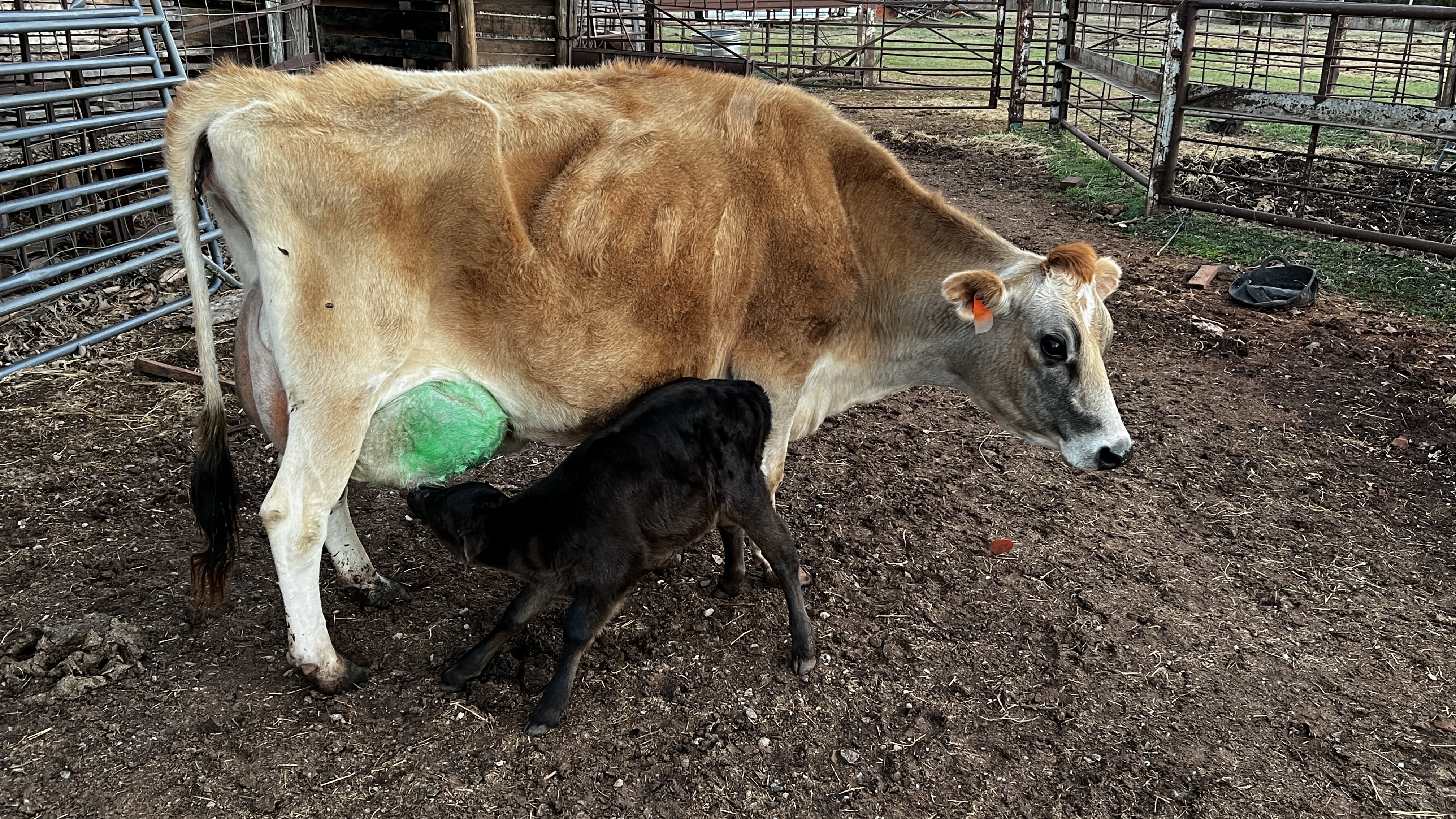
If you read my last post, you know that we have a new resident here on the ranch. Shelby, our caretaker, has her own cows here, and Lucy just had a new calf. Her name is Bugsy. (The ranch cows don’t get names, except for Evil White Faced Cow, who was recently auctioned off).
She was only a few hours old when we first met her, so we didn’t get close. Once Shelby brought her up to the barn, we were able to say hello.
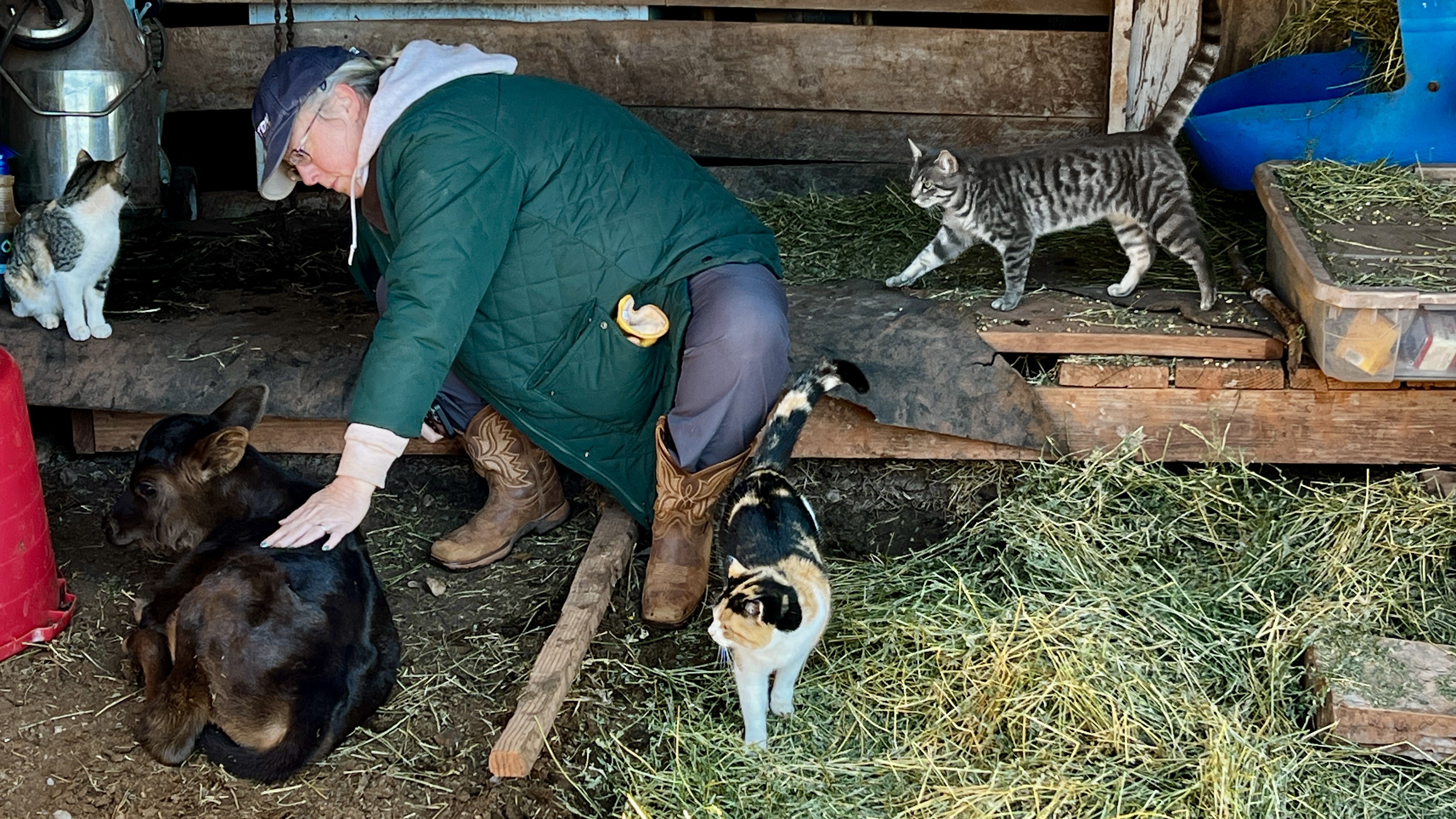
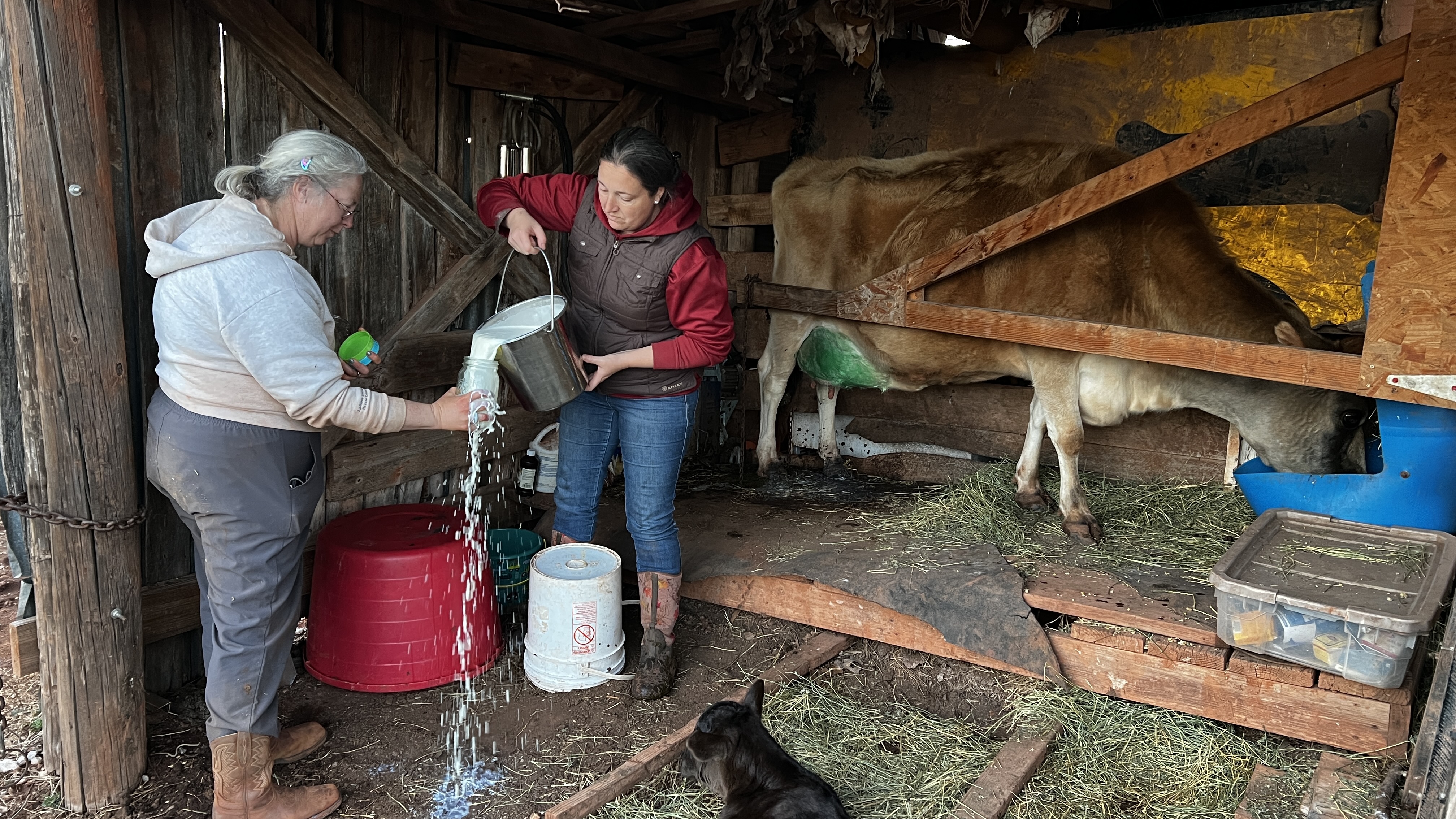
Lucy is a dairy cow, so the twice-daily milking has started. Julie was able to complete a bucket-list item and learned to milk.
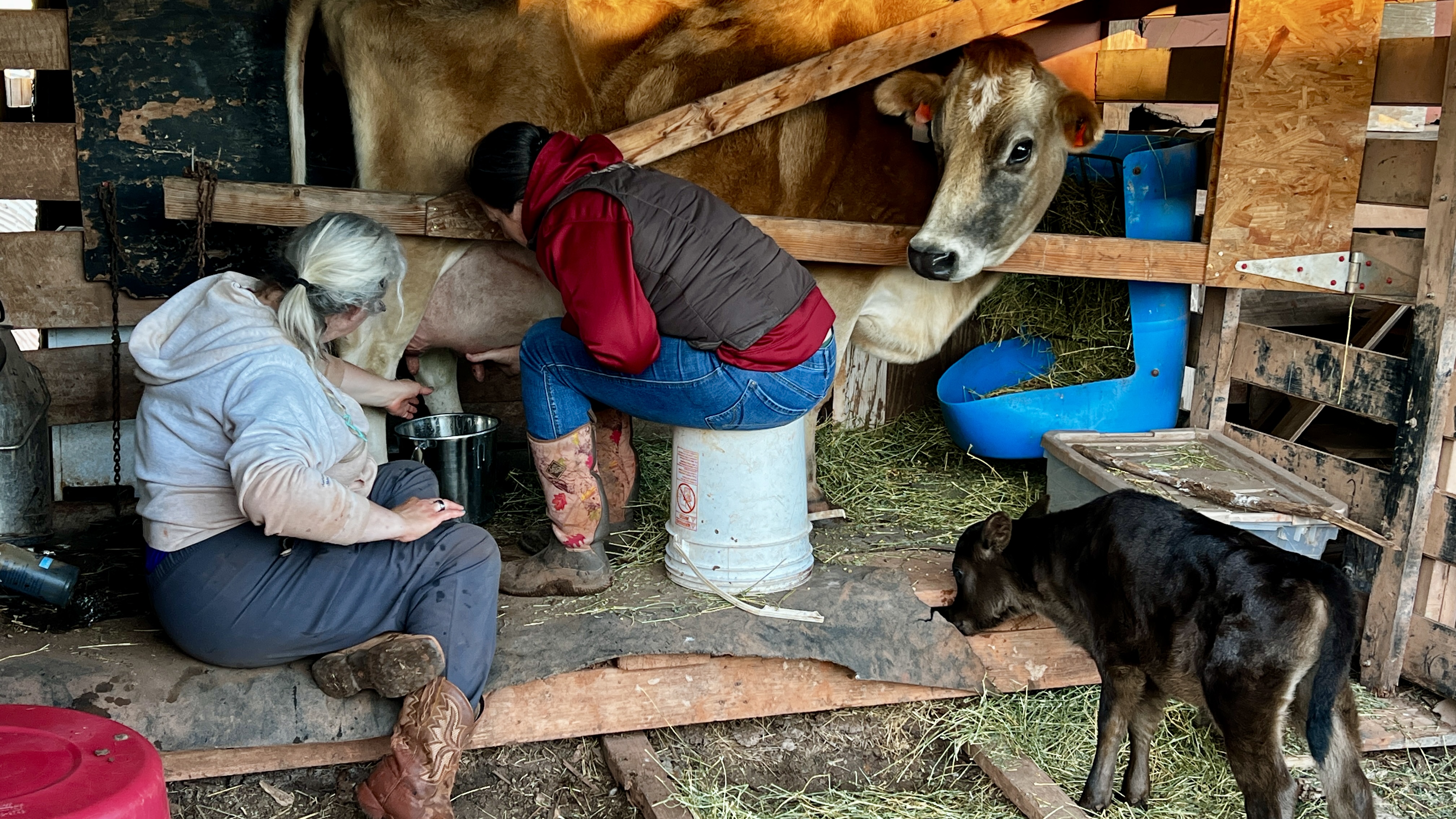
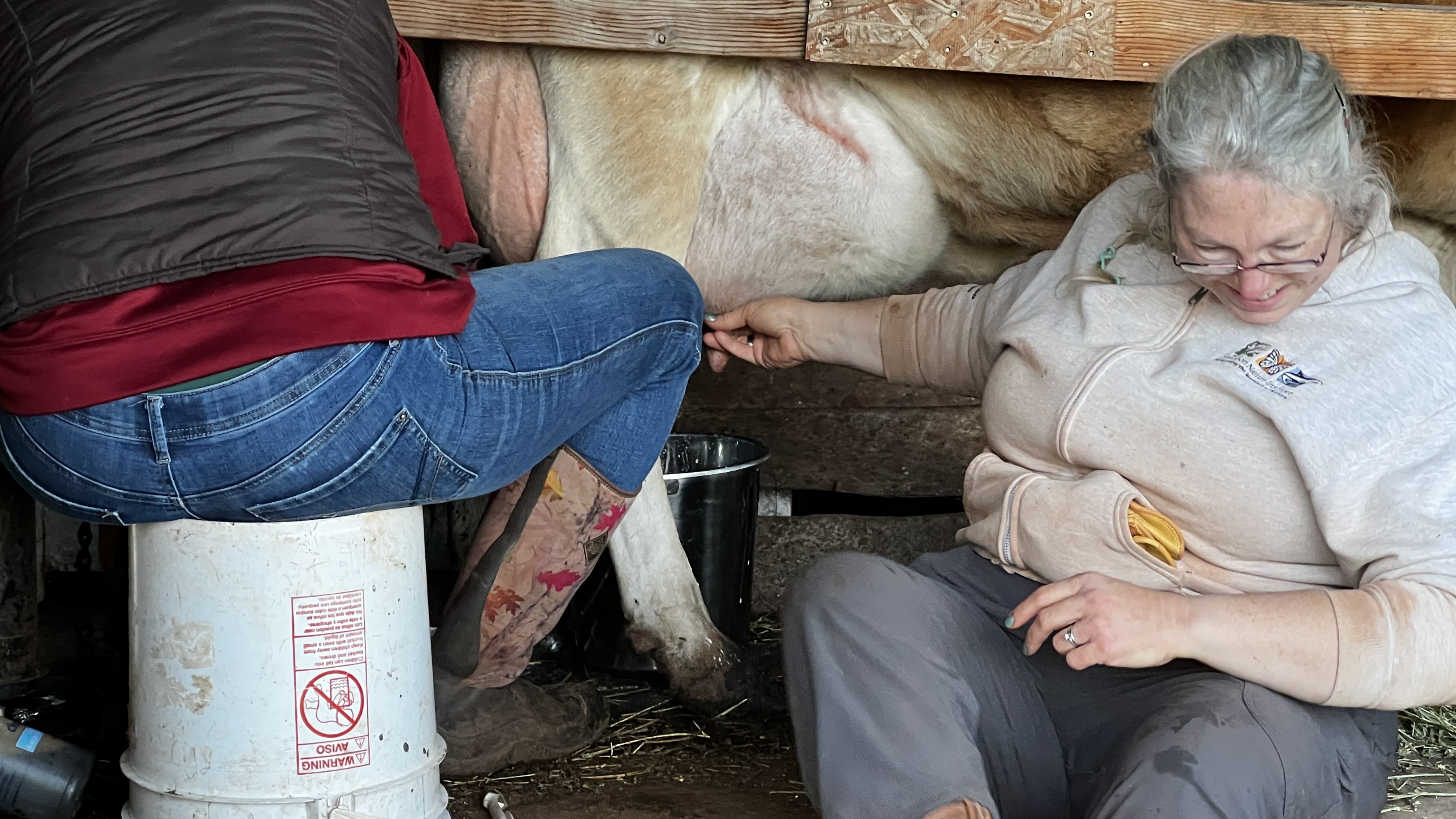
This is when the inevitable happened.
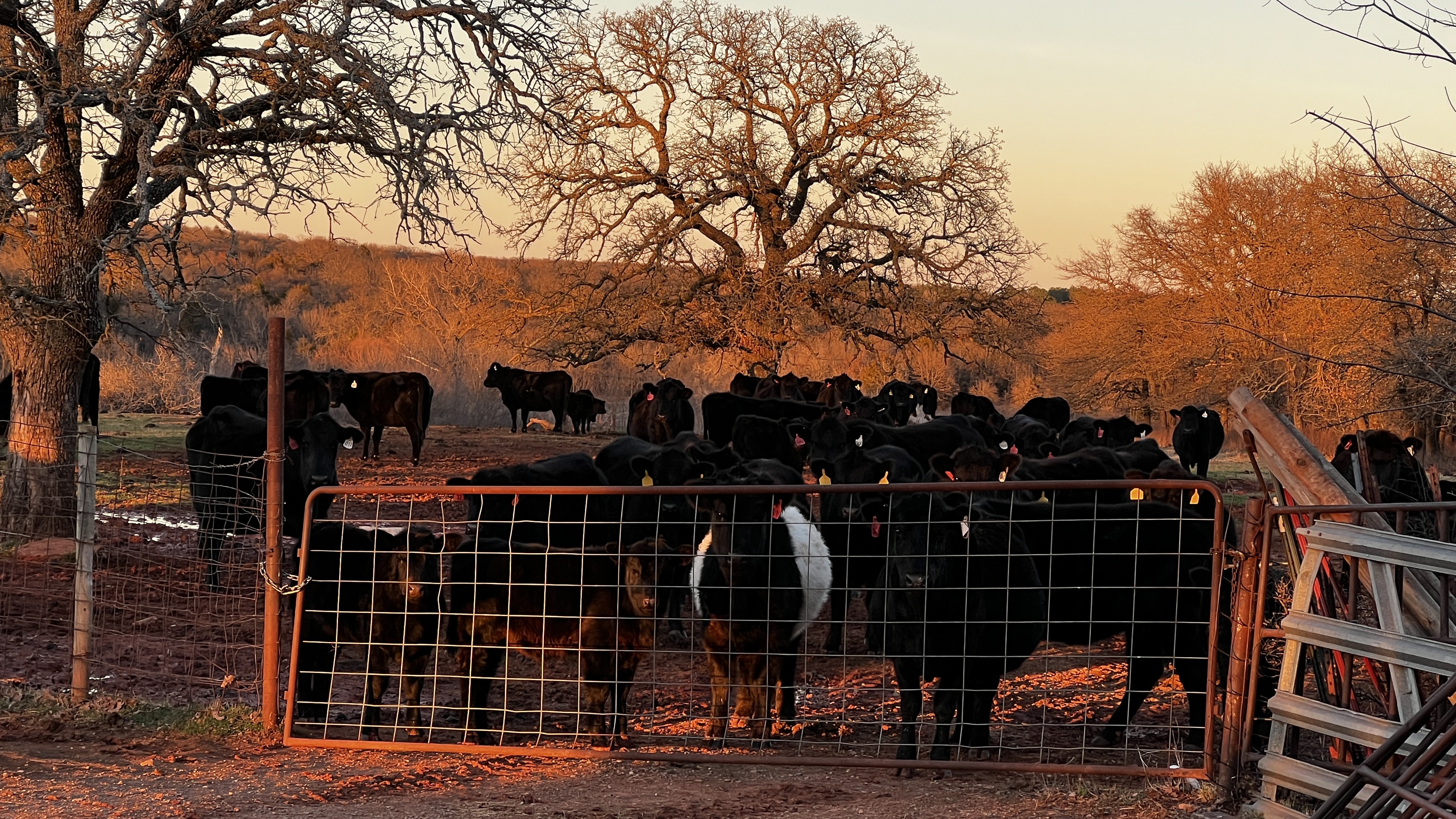
There was quite the crowd waiting for their own dinner just outside the barn.
We were able to take some home, and Julie plans to make some cheese and butter.
Afterwards, Bugsy ate her fill as well.
We continue to learn about ranching. Life is good.
Stand Up For Science
Today is national Stand Up for Science day, and while I won’t be attending any rallies or events, I did want to briefly address it. So I’m going to write about something I usually don’t mention: the weather and how science has improved our understanding of it.
Most of you know that Julie and I used to live near New Orleans, and we were there during Katrina. I can remember Julie packing to leave for an education event for the Audubon Louisiana Nature Center when I did a last minute check on the hurricane’s path. The path had changed—drastically. It was no longer headed west, it had taken a sharp right turn and was coming straight for us as a Category 5.
Everyone knows what happened next. But today, nearly 20 years later, I find myself thinking about how far severe weather forecasting has come—and why it’s more important than ever to support the science behind it.
In 2007, the National Oceanic and Atmospheric Administration (NOAA) established the Hurricane Forecast Improvement Program (HFIP) with the goal of improving the accuracy and reliability of hurricane forecasts, extending forecast lead time for hurricane forecasts, and decreasing forecast uncertainty and increasing confidence in hurricane forecasts.

Through their efforts, the average 3 day track error for hurricanes has been reduced by about 50% and has resulted in a nearly 50% decline in intensity prediction errors.
That’s good news for coastal America. That’s science.
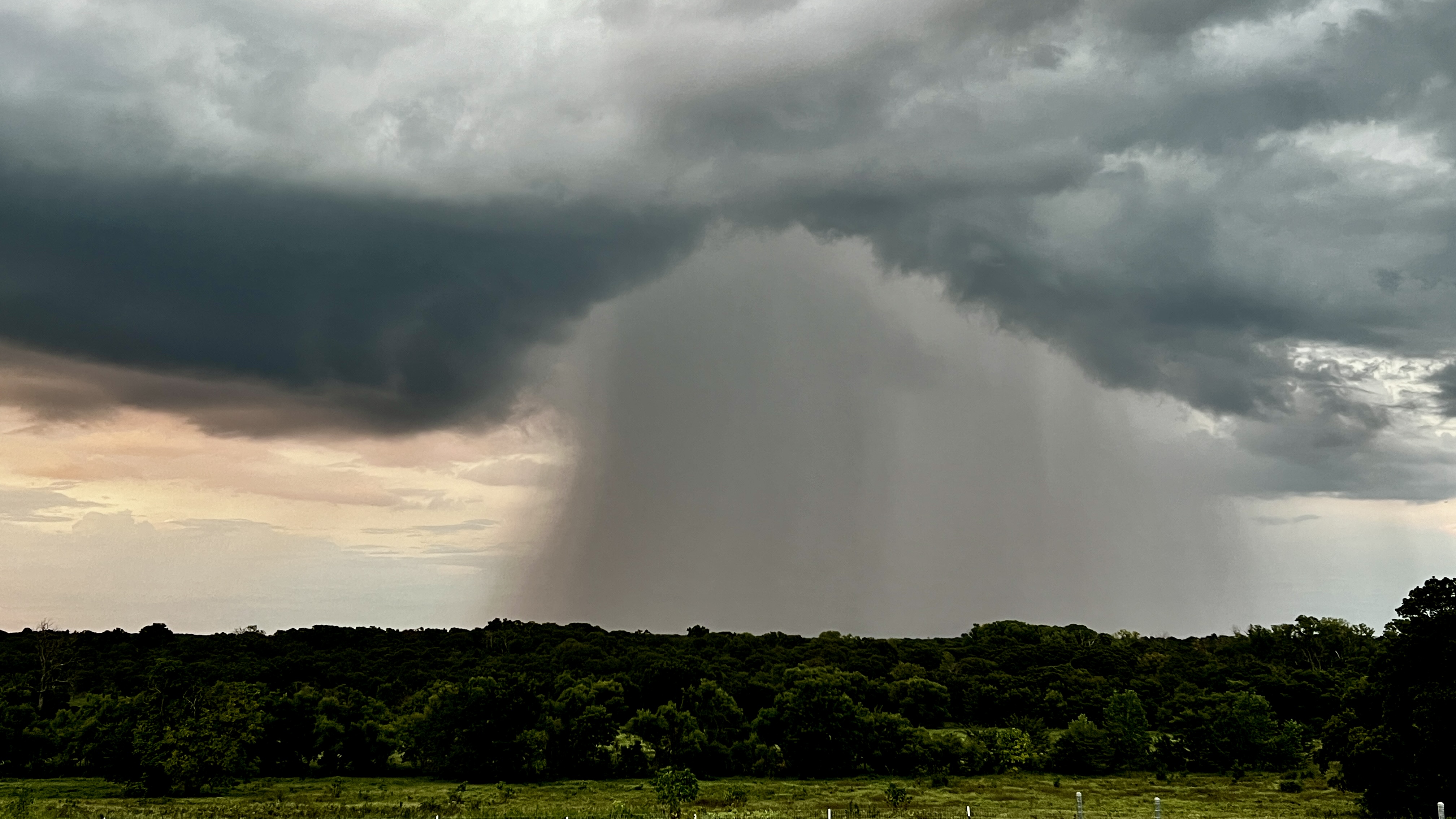
Now Julie and I have moved to central Oklahoma and traded our hurricane warnings for tornado warnings.
It’s not like it was years ago when the first warning you had was the blast of a tornado siren. Lead times for warnings have increased from an average of 3 minutes in recent years to almost 15 minutes today. More than enough time to get to shelter.
What’s more, today’s forecasts can predict the possibility of tornado-producing weather even earlier, sometimes days in advance. With improvements of weather tracking technology, such as dual-polarization and phased array radar, better data can be provided to forecasters resulting in faster warnings.
That’s good news for interior America. That’s science.
Even every day weather forecasting has become more accurate. A four-day forecast today is as accurate as a one-day forecast 30 years ago.
That’s good news for all Americans. That’s science.
Accurate forecasts aren’t just nice to have, to tell whether or not you need to bring an umbrella to work. Farmers use them for agricultural management, which can make the difference between a lost harvest or a harvest of plenty. Grid operators rely on accurate forecasts of temperatures for heating and cooling demand, and how much energy they’ll get from wind and solar farms. Pilots and sailors need them to carry people across oceans safely. Accurate information about future weather is often absolutely vital.
So this is all good news, right?
Sure it is. But I’d like to make sure this trend continues rather than reverses course. And to do that, we need to understand where the data and these improvements are coming from.
I saw a post recently on social media where someone said,
“what do we need NOAA for? I can get better forecasts on my phone.”
The best reply?
“what do we need potato farmers for? I can get fries at McDonalds”.
What many people don’t realize is that 75% to 90% of the data used by commercial weather services like The Weather Channel and AccuWeather originates from NOAA. NOAA provides this data for free through its open-data policies, allowing private companies to refine and distribute forecasts.
Yet despite its critical role, NOAA, along with many other federal agencies and programs, is under threat.
Recently, Jim Cantore raised concerns about funding cuts:
This is horrible news for numerical weather prediction in this country. The data that comes from these key parts of our weather enterprise saves lives.
One major target? The Radar Operations Center in Norman, OK—a facility that develops phased-array radar technology, which could significantly improve tornado warnings. Its potential closure would be a huge step backward for weather science and public safety.
The Bigger Picture: Science Under Fire
I’m not here to debate government restructuring. But I am here to stand up for science—and sometimes that means calling out misinformation.
Carl Sagan once said,
History is full of people who out of fear, or ignorance, or lust for power have destroyed knowledge of immeasurable value which truly belongs to us all.
Don’t fall for the sound bites. Do your own research. Stay informed. Support the science that keeps us all safe.
Because without it, we risk going backward.
A Final Note
If you enjoy these posts and usually see them through Facebook, consider subscribing! I don’t spam, sell your data, run ads, or charge you to read. We started this blog because people wanted to follow our journey, but Facebook’s algorithm doesn’t always show our updates. By subscribing, you’ll get an email each time I post—so you never miss an update.

 Ranch Naturalists
Leave a reply to ellen wood Cancel reply