And the obligatory moving update
Birding in New Orleans East
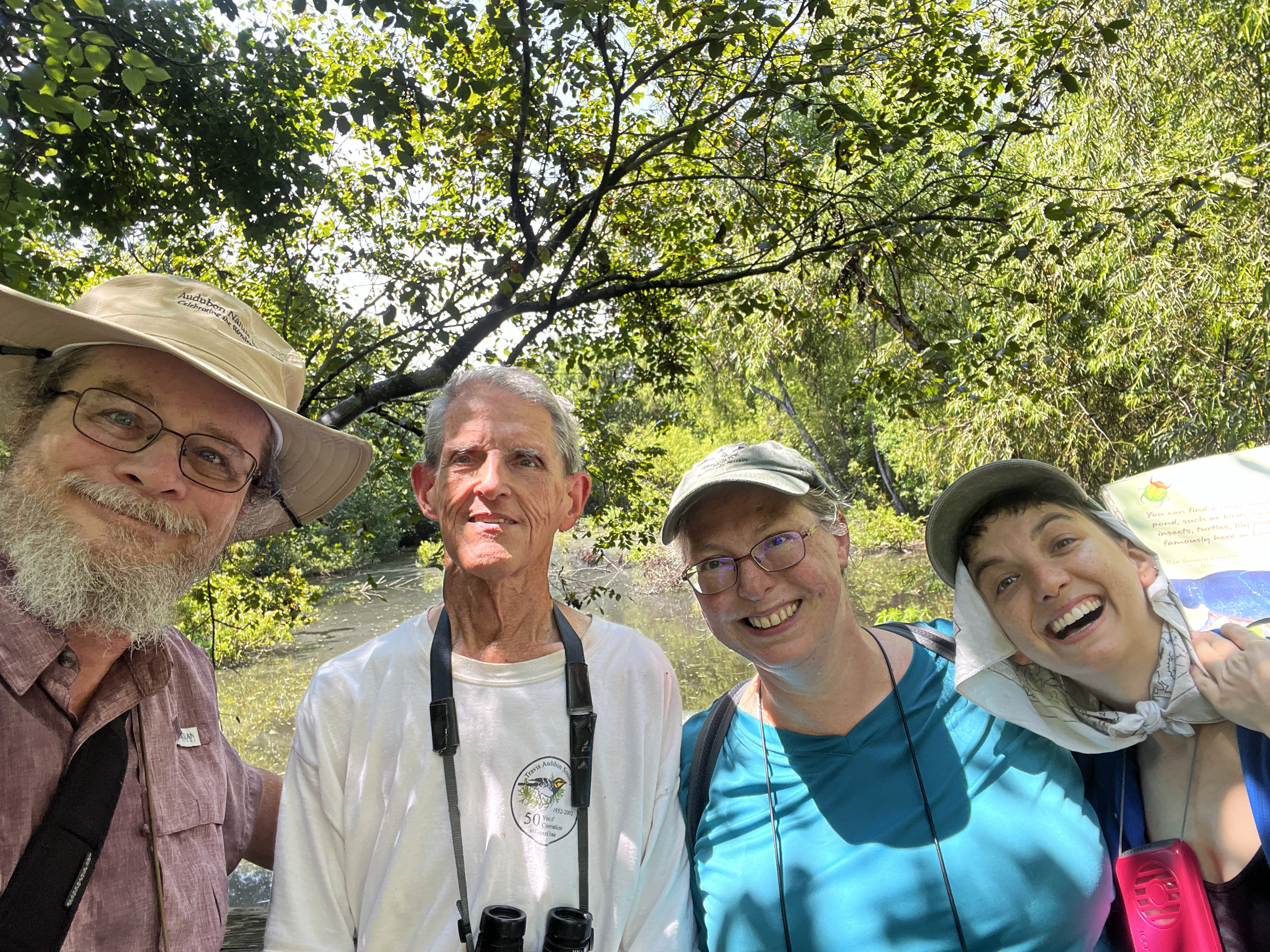
Yesterday, Julie and I took a break from packing to go on our last bird survey in New Orleans East and the Audubon Louisiana Nature Center with our friends Glenn and Amy. Glenn has been doing a weekly bird survey in this area for the last 40 years, and being able to bird with a man who has amassed that level of knowledge is always a treat. With a heat index of 106° it was not the most pleasant of weather, but we all had fun anyway.
Of course, being naturalists, birds weren’t the only things we noticed. One of the first things I saw was what most homeowners call a weed on their perfectly manicured lawn: a sensitive plant (mimosa pudica). One of my favorite weeds flowers, and I hope we have them in Oklahoma. Unless it is invasive — I reserve the right to not like it any more.
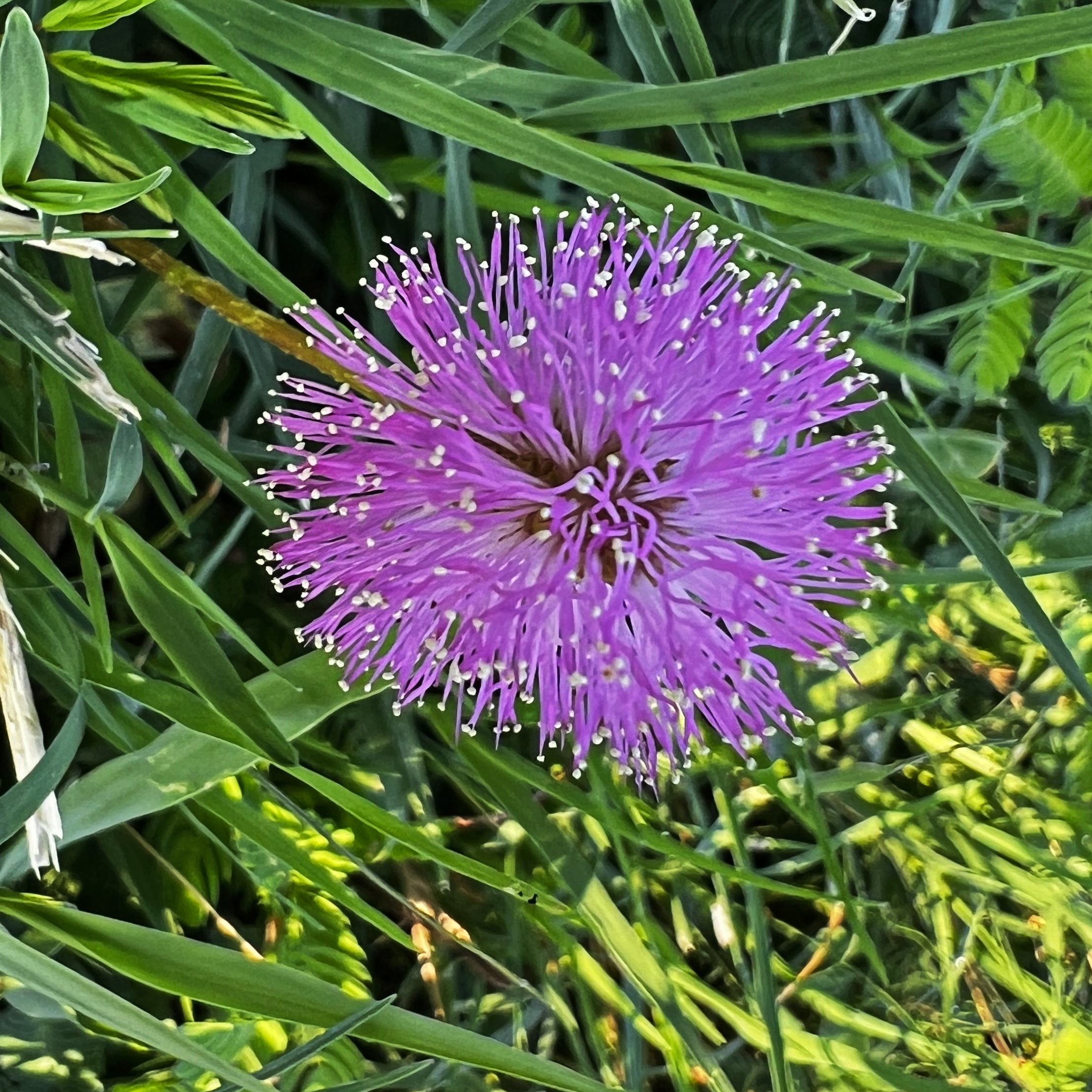
This is called sensitive plant, or touch-me-not, or shame plant, or sleepy plant, or many other names, but I’ve always called it a koosh ball.
A sensitive plant responds to touch and other stimulation by rapidly closing its leaves and drooping, a behavior called thigmonasty (the non-directional response of a plant or fungus to touch or vibration). While it’s fun to watch, the continued stimulus does come at a cost to the plant. The rapid leaf folding requires energy to execute, requiring the plant to expend ATP (adenosine triphosphate) to power the ion pumps that cause the changes in turgor pressure responsible for the movement. After folding, the plant needs to expend additional energy to re-open its leaves and return to its normal state.
The lawn where we found this plant is actually an empty lot between two very nice houses on the shore of a small lake. Ducks, geese and other shore and water birds are common here, so this is one of our regular stops on the survey route.
This time, however, one of the homeowners came out to see what we were doing. She mentioned that she’d lived there for twenty years and saw Glenn’s car every week. My van was parked behind his car, and I have large magnetic signs on each side that say “Wildlife Survey Vehicle: Frequent Stops”, so maybe she was finally curious enough to see what was going on.
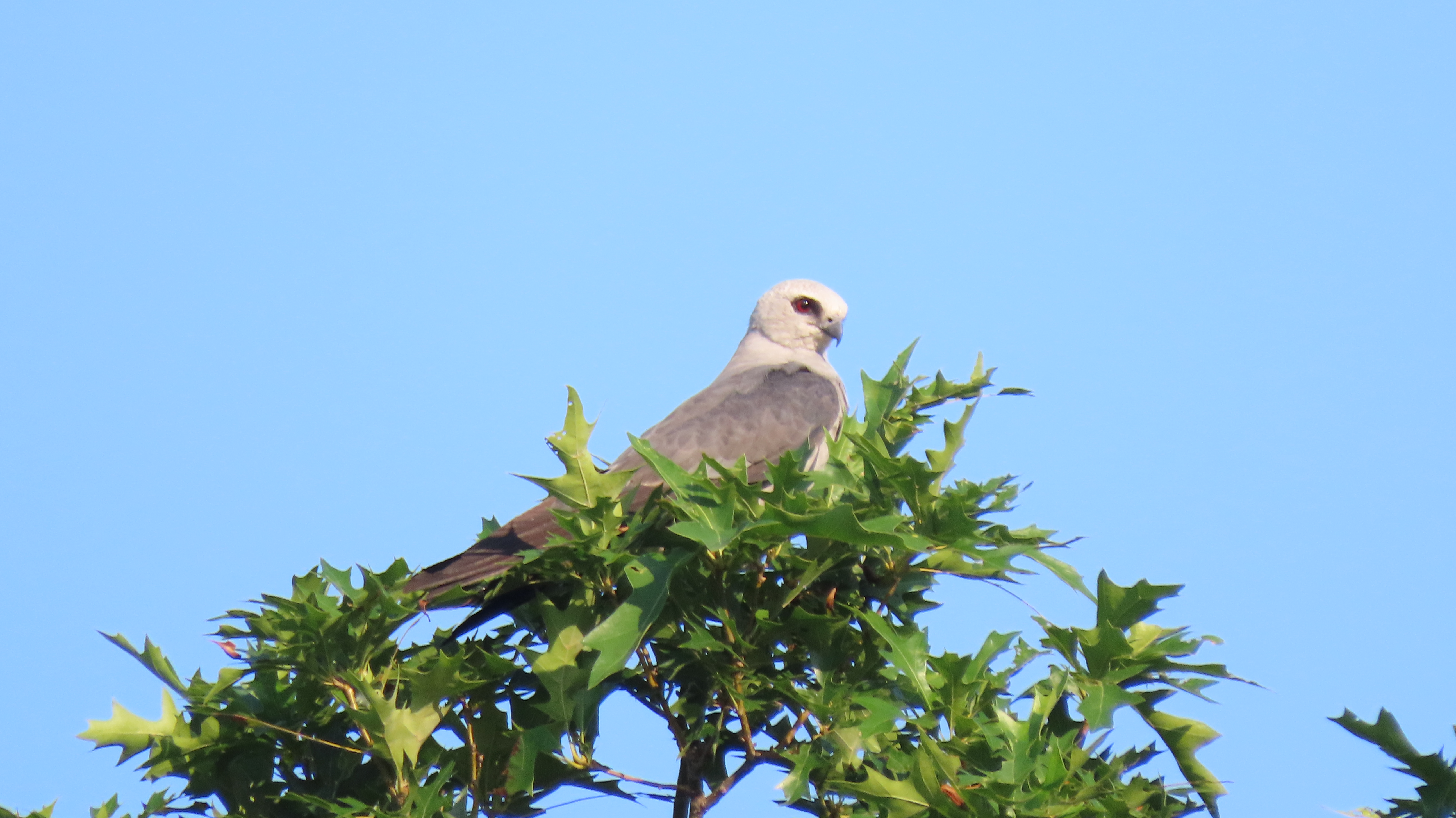
It was nice to be able to engage with her, explain the importance of documenting changes over time, and answer questions about the types of birds she was seeing. As we were talking, a Mississippi Kite landed in her tree, so we talked about that for a bit.
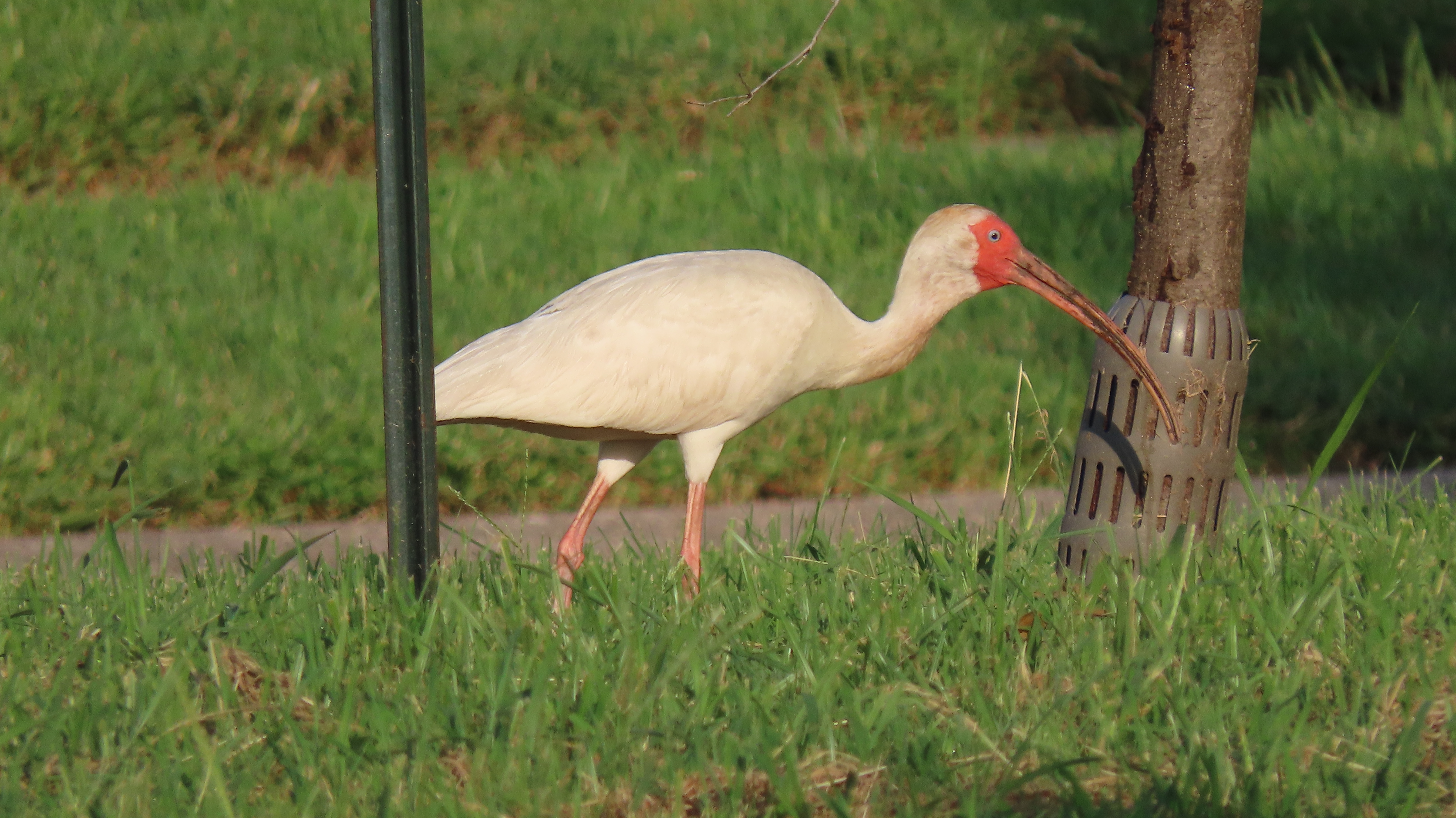
A white ibis was also foraging across the street, so we also talked about how the area is becoming more urbanized over the last 40 years and how the birds are adapting.
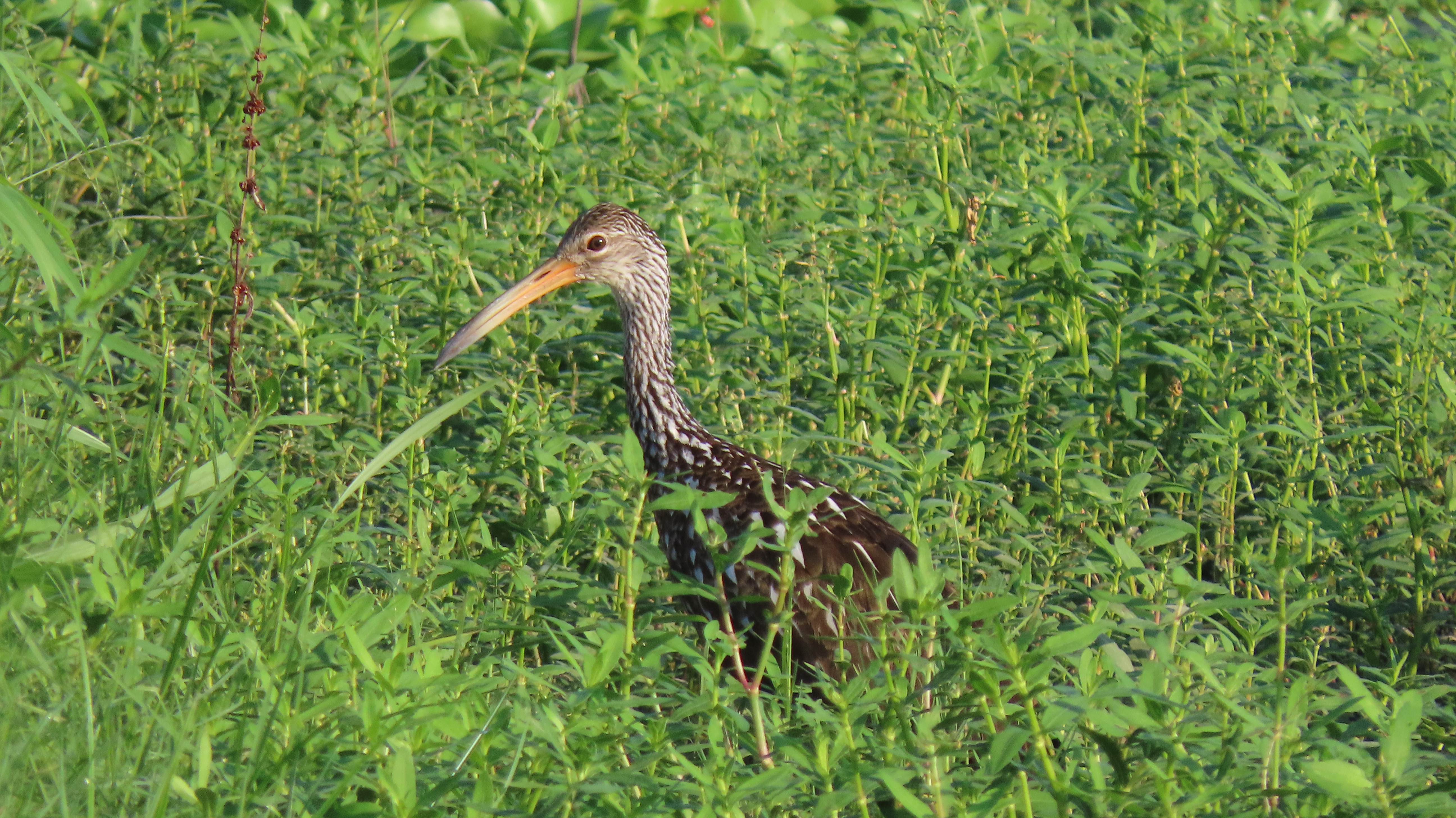
Nearby, we saw a foraging limpkin. These birds used to be very rare here in this area, but the population has exploded in the last few years as the invasive apple snail, the limpkin’s primary diet, has expanded its range. It wasn’t that long ago that Glenn and I spotted the first one to be observed in St. Bernard Parish and rare bird alerts were being sent out for every sighting. Now they’re everywhere.
That birding trip in St. Bernard Parish is where Glenn and I first met, although he and Julie met many years ago at the Nature Center.
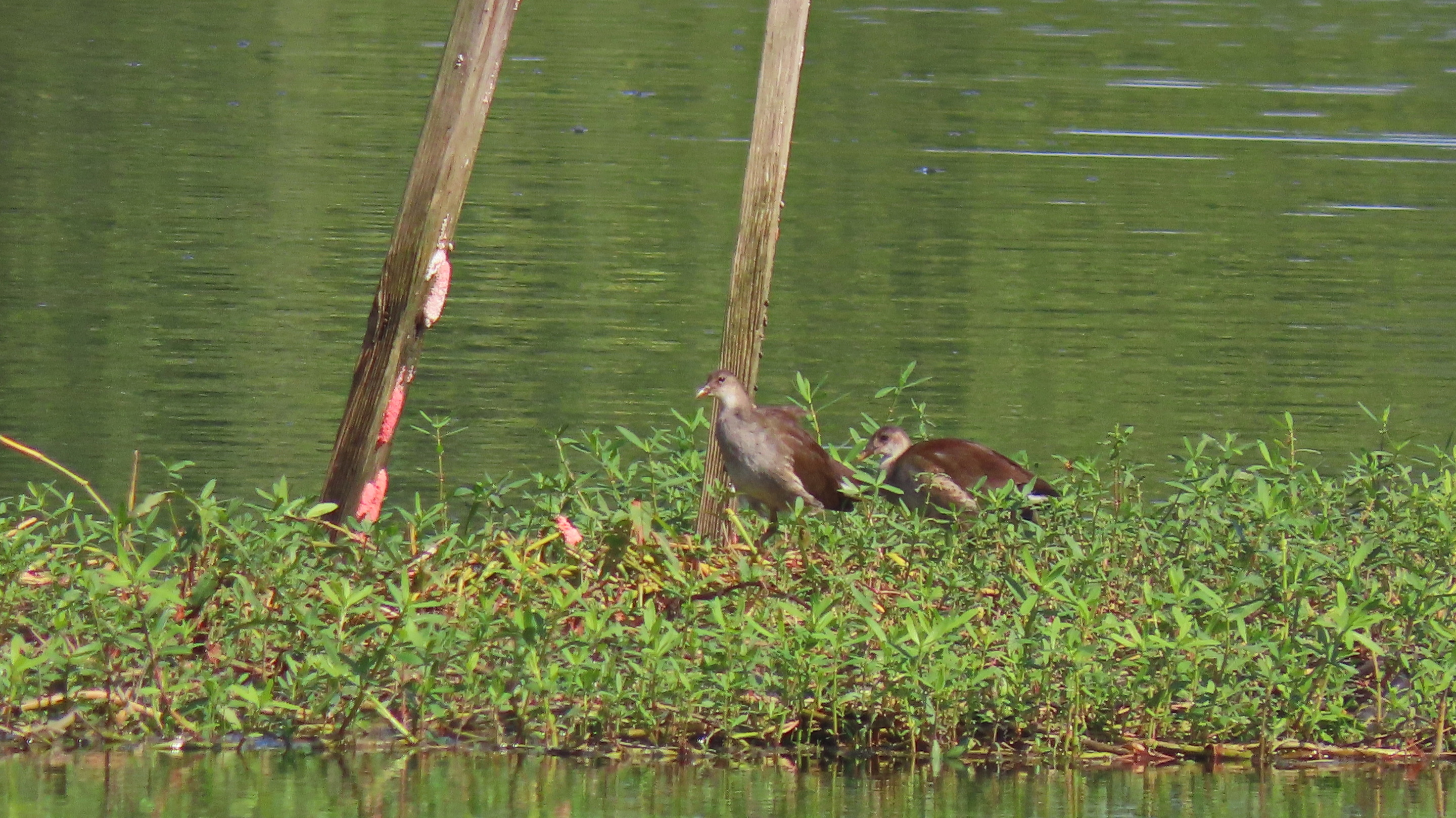
Here are a couple of young gallinules, but more importantly, look at the bubble-gum pink egg masses on the left wooden post. Those are highly invasive apple snail eggs, and the primary reason for the expanding limpkin range.
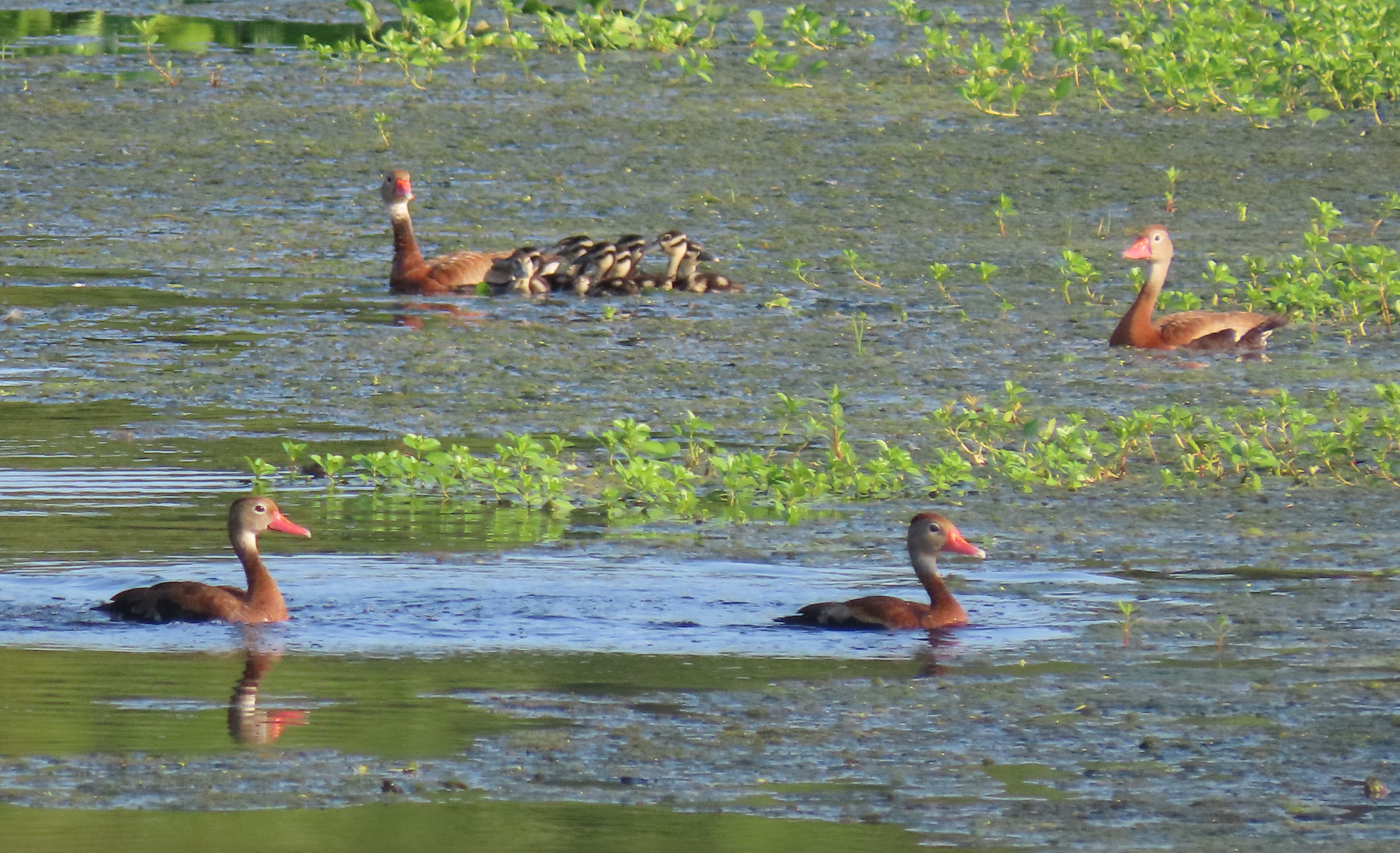
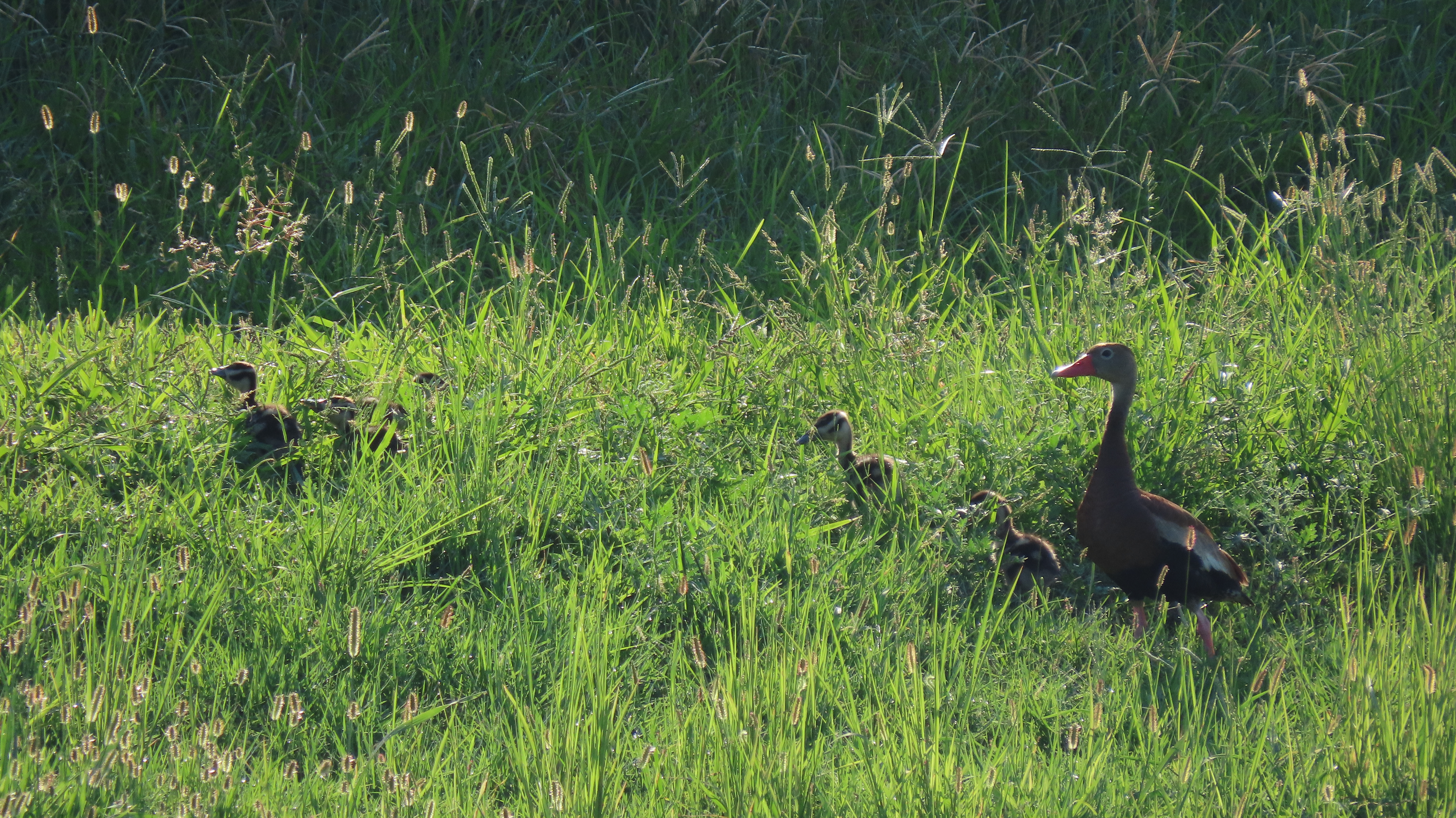
Here are some black bellied whistling duck families. The first time I’ve seen these ducklings!
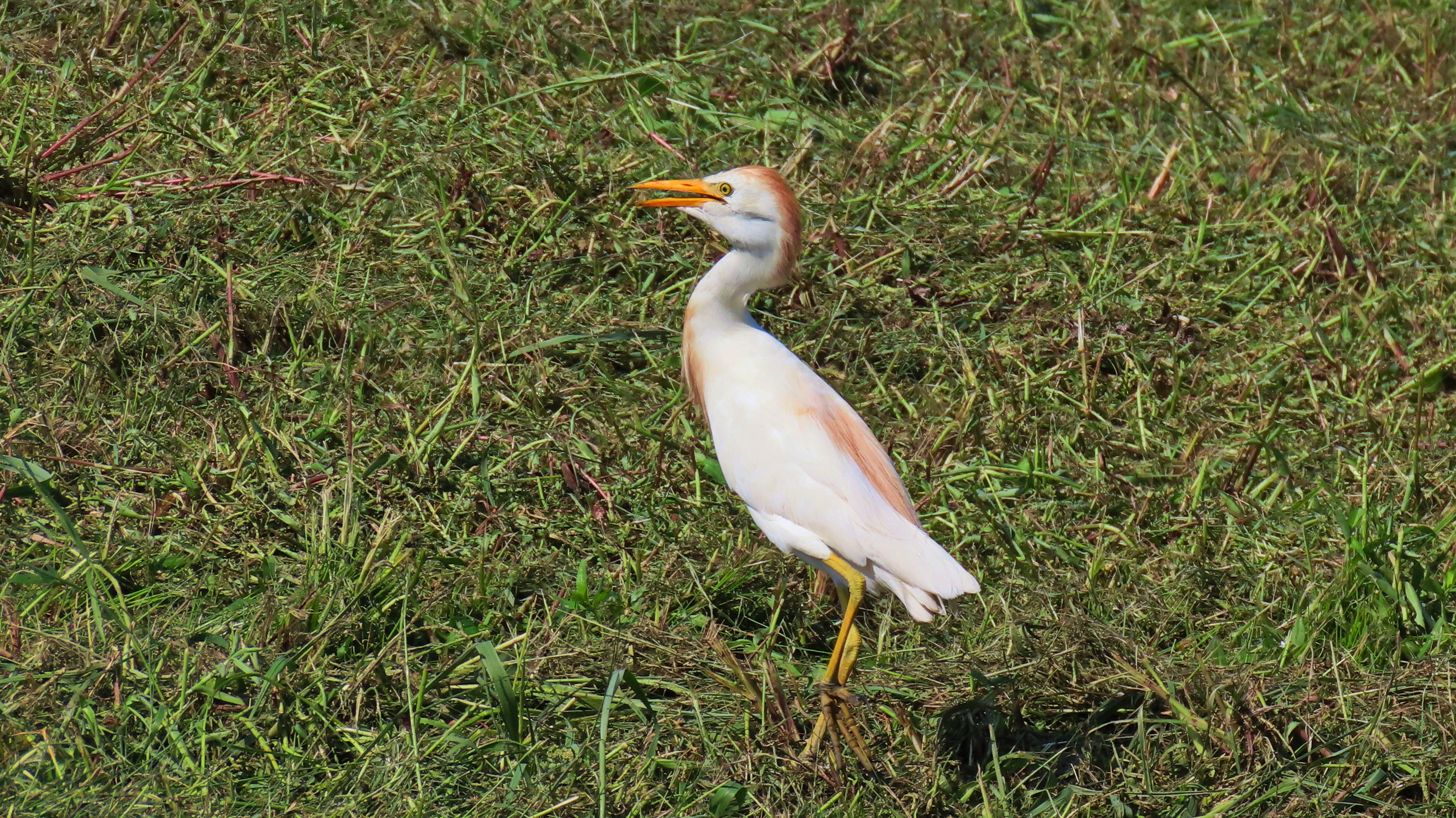
We saw several of the newly renamed Western Cattle Egrets (renamed last year from just Cattle Egret) fluttering their gulars to stay cool in the heat. Did I mention the heat index of 106°?
Other than birds
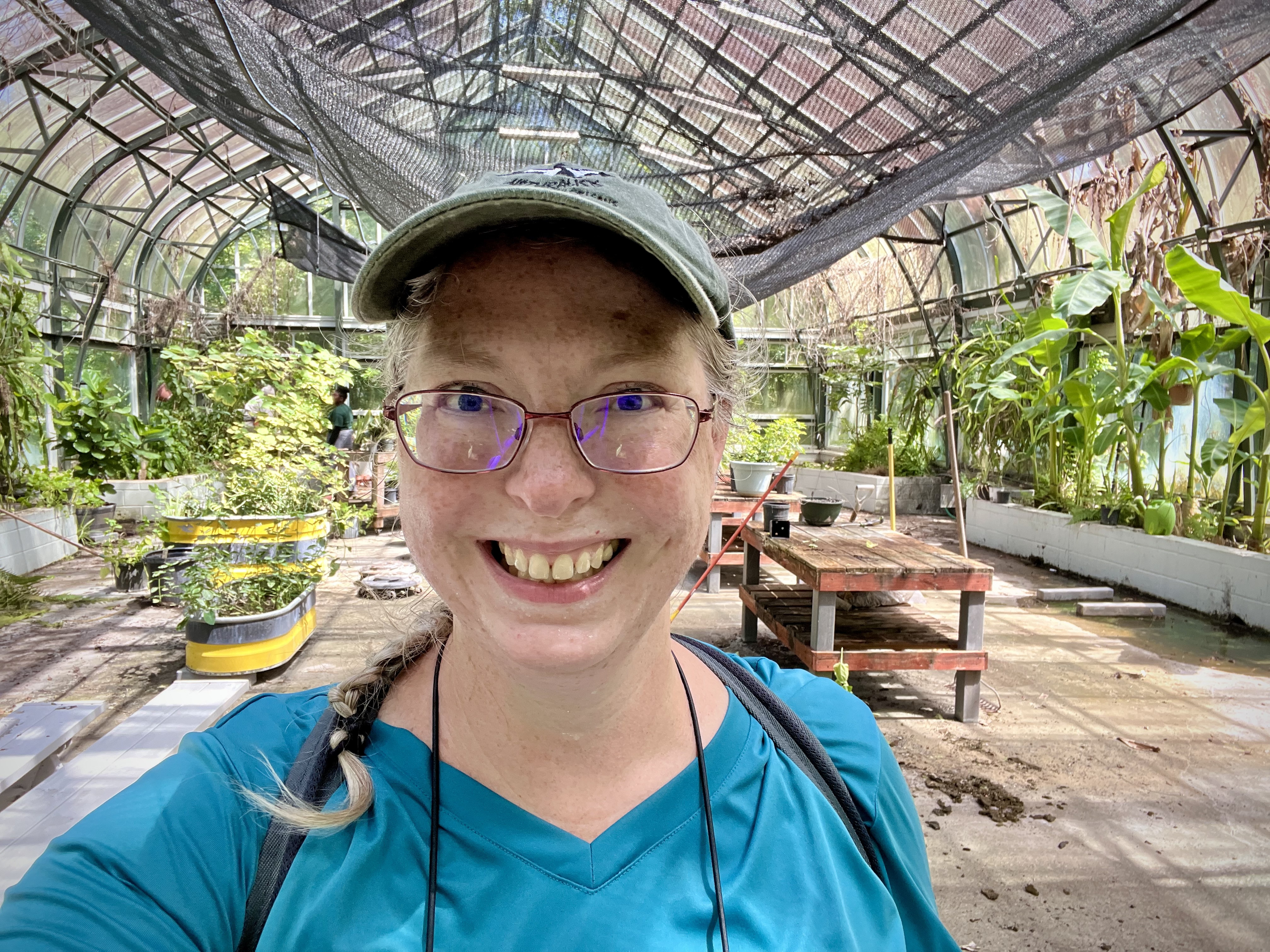
The long-closed greenhouse at the Nature Center was open, at least to staff, during our visit. It’s been 19 years since Julie has been inside, and she was excited to get one last chance before we moved. (For those who aren’t familiar, Julie was working as a naturalist at Audubon Louisiana Nature Center when we first met.)
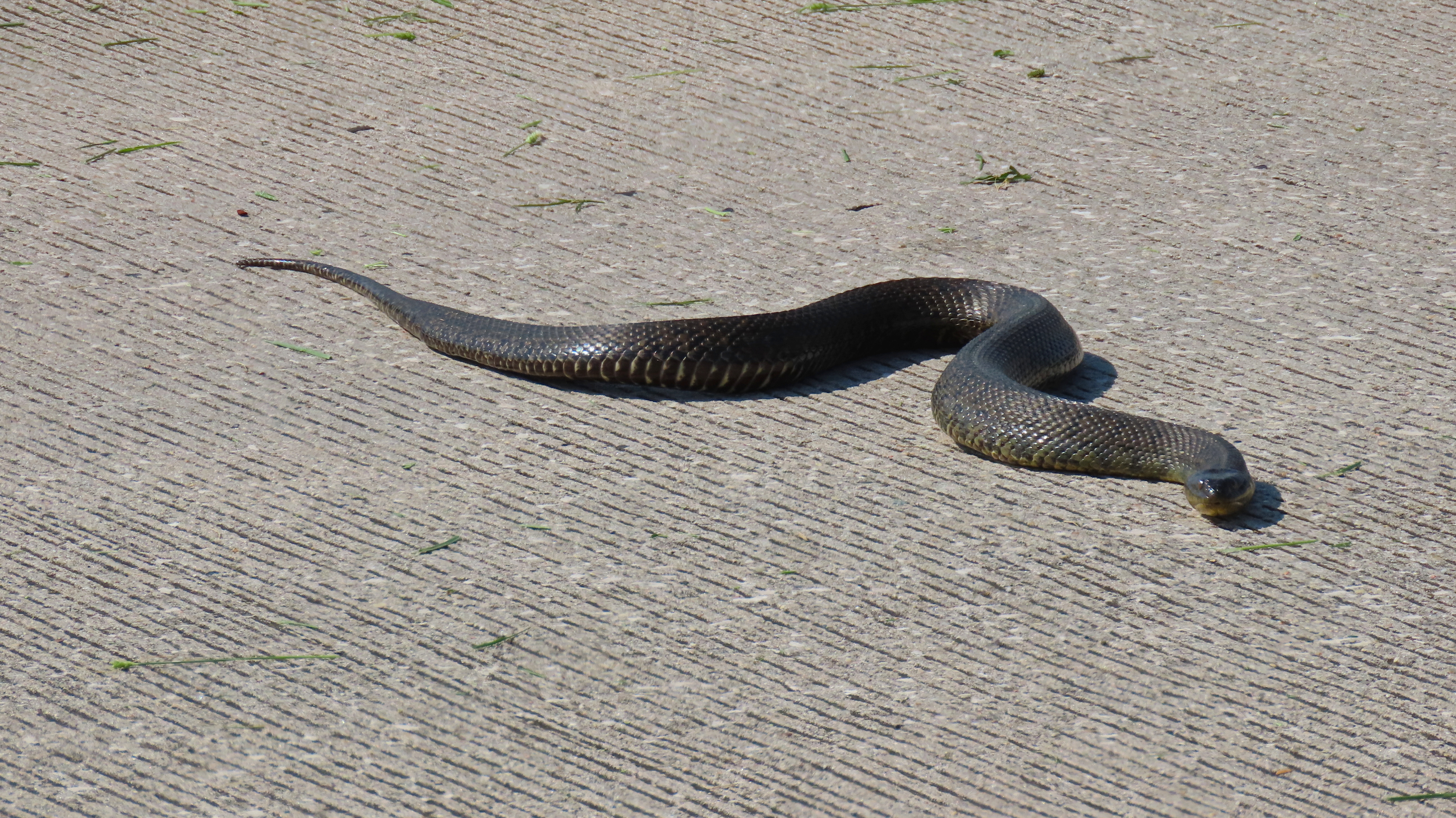
One of the sadder moments of the day is when we saw this Mississippi Green Watersnake crossing the very hot road to get away from a mowing crew. We were marveling at how it was able to contact the road as little as possible, a bit like the sidewinders you see in the desert documentaries.
It was almost across the road when a car came speeding down. We tried to wave it over — there was room to move, no one was coming the other way — but it didn’t help. I don’t know if they didn’t see it, didn’t care, or deliberately aimed for the snake. I just wish people would be a little more considerate and careful of the wildlife.
We saw several of these Giant Leaf-Footed Bugs. Amy calls these “Cowboy Bugs” because they look like they are wearing chaps. If that catches on, remember Amy said it first.
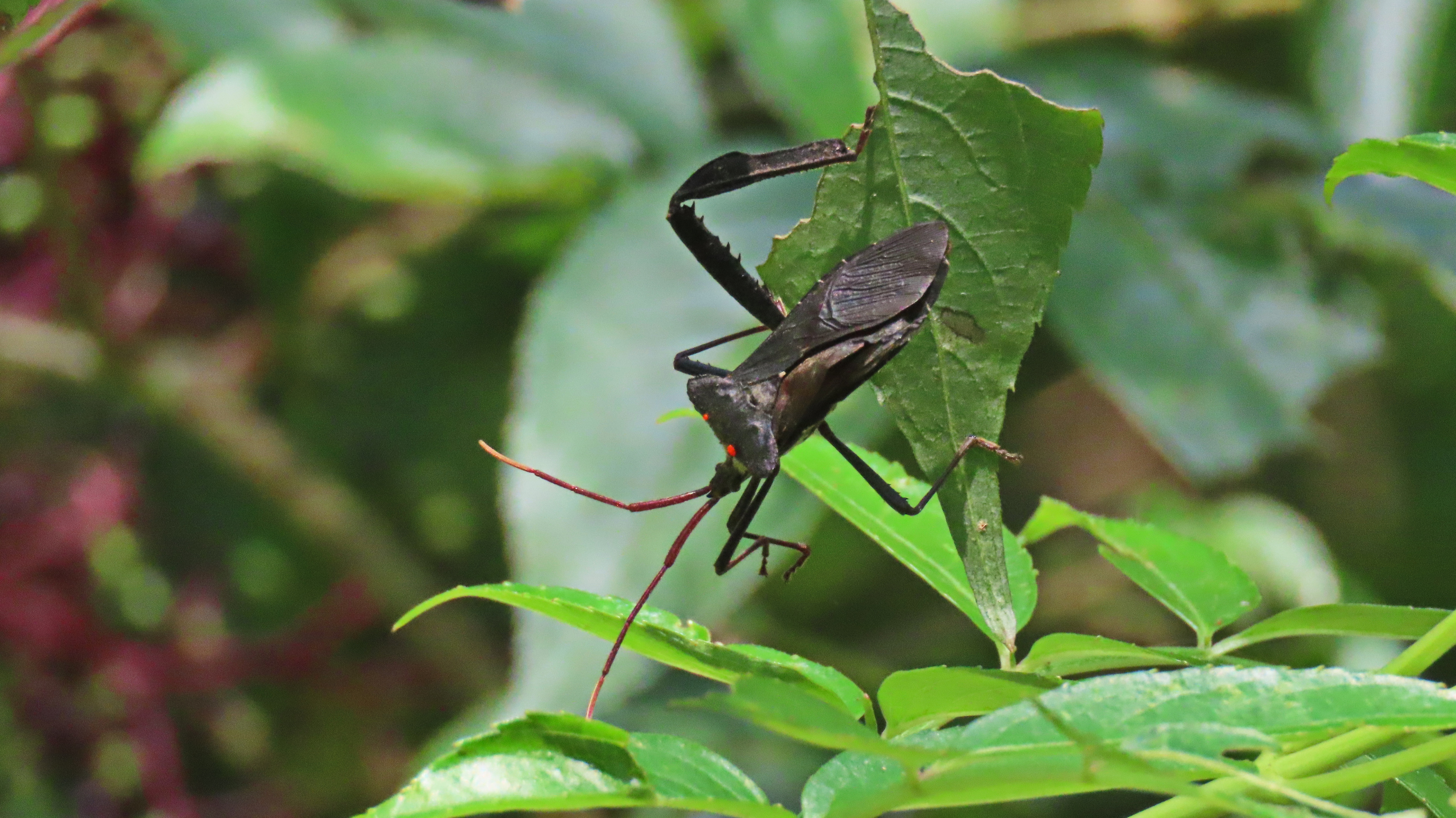
I believe these are the nymph version of the leaf-footed bugs. I originally thought milkweed assassin bugs, but looking closer, I can see some of the back legs have a flaring that points toward leaf-footed bugs. In the garden, milkweed assassin bugs = good, leaf-footed bugs = bad, particularly to tomatoes, eggplant, peppers, and fruit trees.
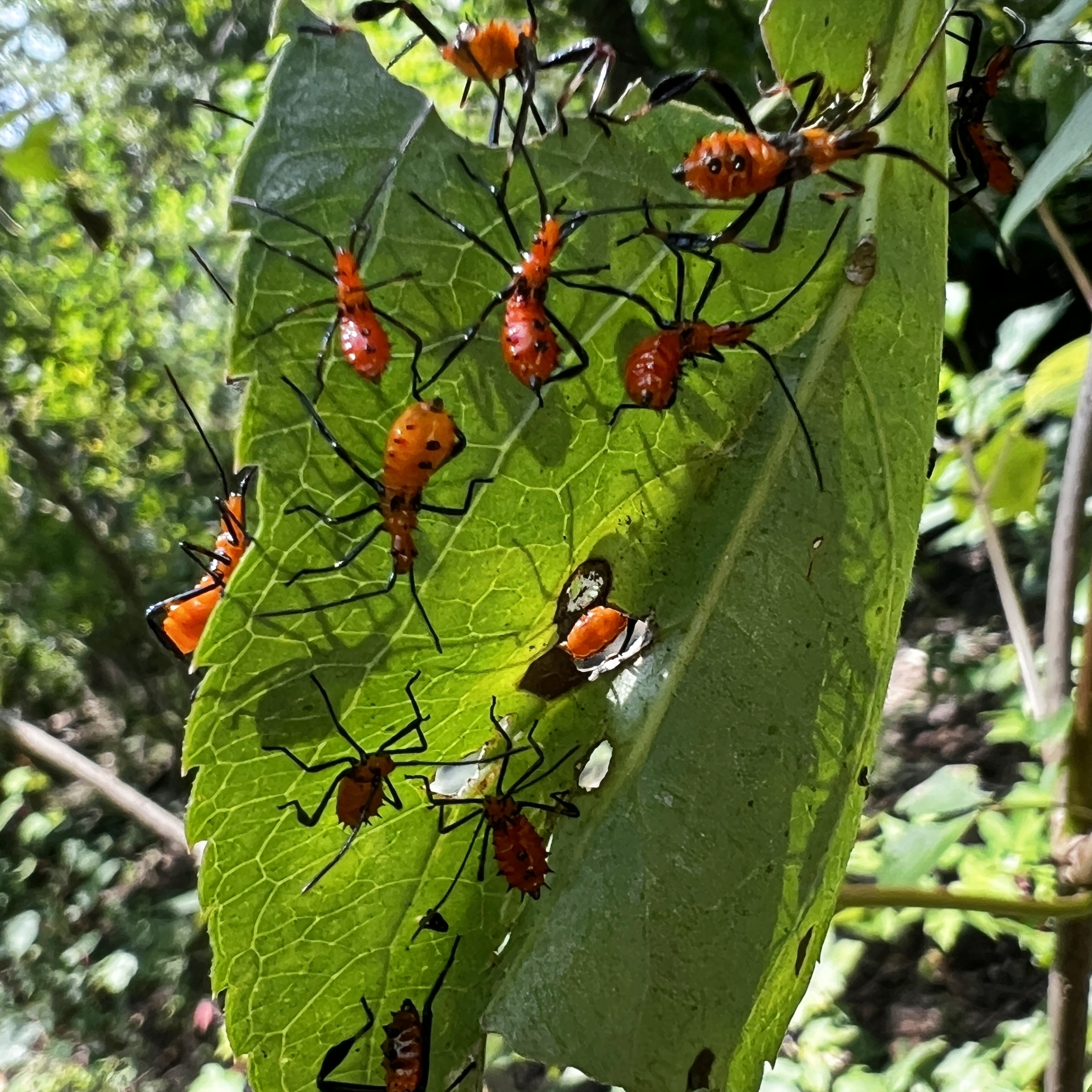
And, since I suspect the last three images have creeped out more than one reader, especially my mother and my sister-in-law, I’ll continue on to the moving update.
The long awaited moving update
The movers are coming in 5 more days. We had planned to leave shortly after all our stuff did, but things happen.
Getting power run all the way to the house is taking a little longer than expected. Julie had to fly up there for one day to sign a work order, and there were still a few things the power company wanted cleared, as well as having the electric meter/power rack installed, before they would start. That’s done, and we’re waiting on them to start. They’ll need to install three poles down the county road, then underground up to the house.
Once power is actually on, we can order the AC installation. We won’t know how long that takes until the order is put in. While we’re waiting for that, we’ll be able to finish the parts of the well and septic systems that require power.
This would be super frustrating if we had a deadline, but we don’t. We’re not putting our current house up for sale or showing it until we’re completely out, and neither of us are starting a job with a start date.
So when people ask when we’re actually moving, here’s my answer:


 Ranch Naturalists
Leave a comment