You may remember that Julie and I recently attended raptor renesting training at WildCare Oklahoma.
Yesterday, we had the opportunity to assist in renesting two baby great horned owls that had fallen out of their nests in the recent windstorms.
A few notes on wildlife rescue
Before we describe our day, it’s important to keep a few things in mind.
- These are wild animals, not pets – These owls are wild creatures, and to give them the best chance at survival, they must remain that way. Licensed rehabilitators take special precautions to prevent imprinting, such as wearing camouflage drapes and staying silent around young raptors.
- Renesting is the priority – Whenever possible, baby raptors should be returned to their nests. This process requires teamwork: a site scout to confirm the presence of the parents and siblings, a climber to safely return the owlet, and monitors to ensure the baby is cared for post-renesting.
- Gentle transport matters – While driving the owls to their renesting sites, we maintained a comfortable temperature, kept the radio off and talking to a minimum, and resisted the urge to peek under their towels. However, we did enjoy their soft chirping from the back seat!
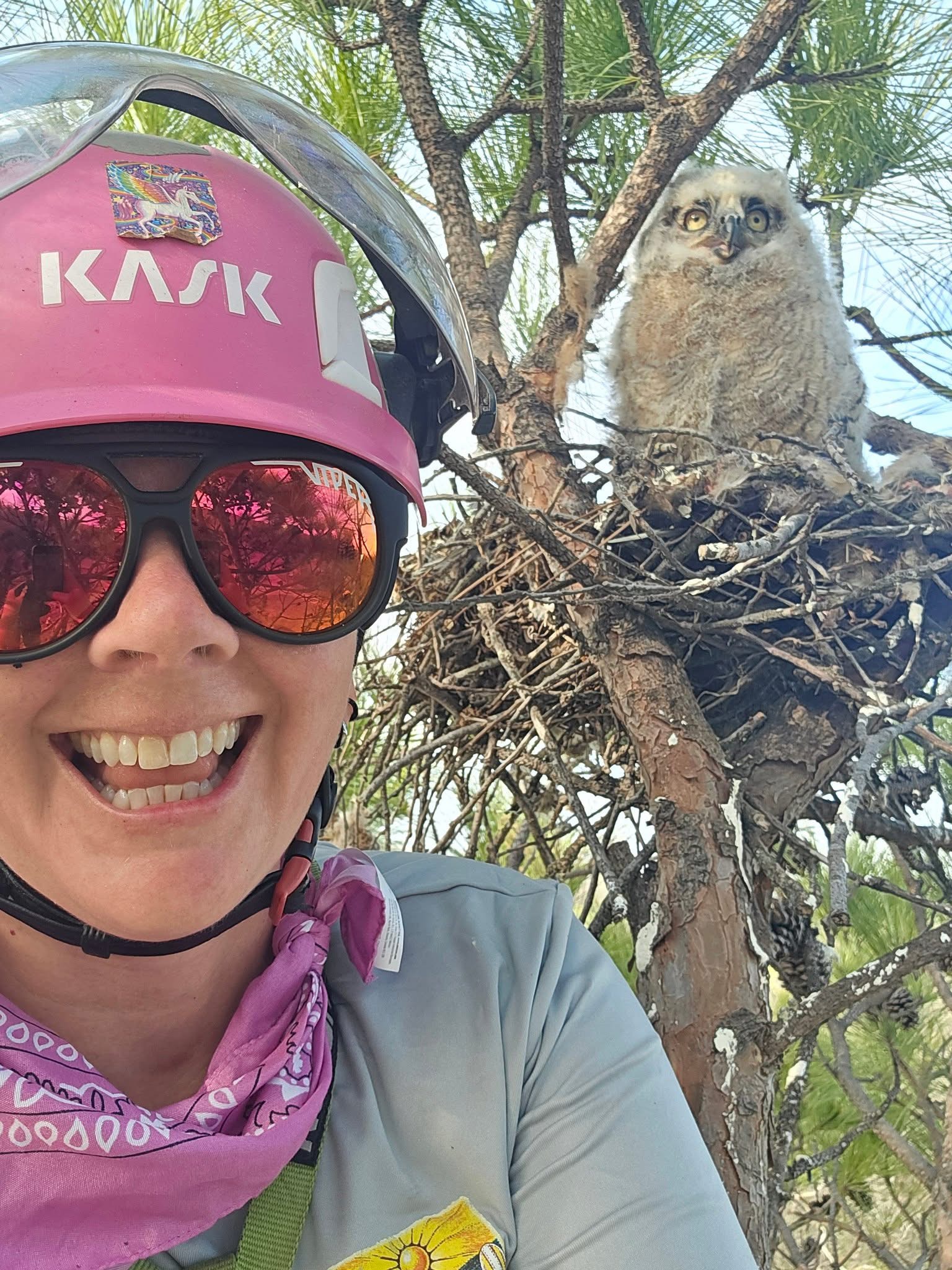
All that being said, we did get a chance for a quick photo during the second renesting when Will (from WildCare) was getting the carrier ready to go up the tree.
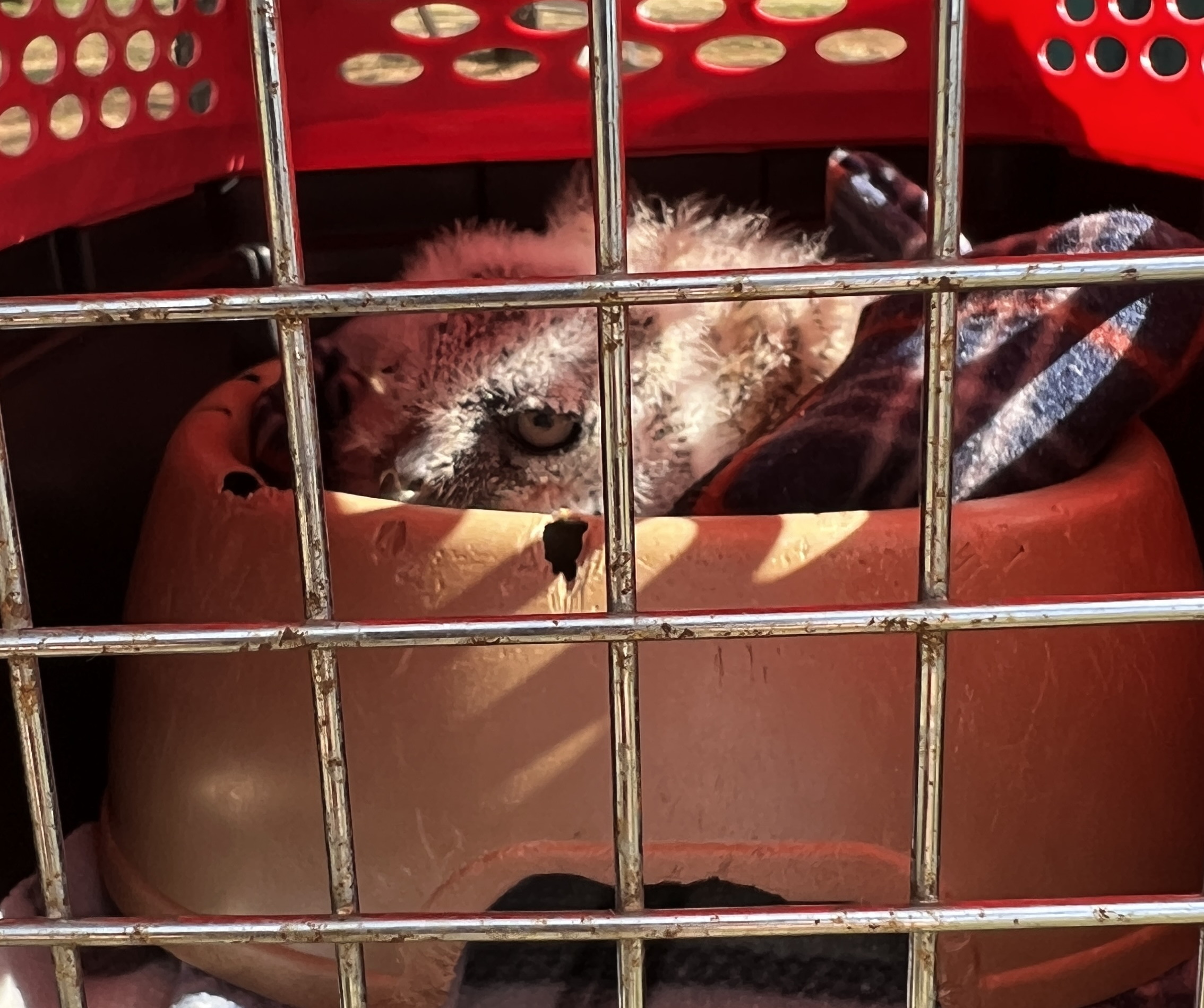
Who is WildCare Oklahoma?
WildCare Oklahoma is a non-profit wildlife rehabilitation center based in Noble, OK. Founded in 1984 by Rondi Large, O.T. Sanders, and Dr. Nancy Harrington, it started as a home-based facility and has since grown into the largest wildlife rehab center in Oklahoma—one of the largest in the U.S.
WildCare by the numbers:
- Over 112,000 wild animals cared for since opening
- 7,500 patients admitted annually
- More than 240 different species treated each year
WildCare is licensed by the Oklahoma Department of Wildlife Conservation for the rehabilitation of native wildlife and also holds federal permits for working with migratory birds and raptors.
On to the renesting
The first baby owl, patient number 500 in 2025, fell out of a tall pine tree in a small residential neighborhood. Its sibling was still in the nest and was watching closely.
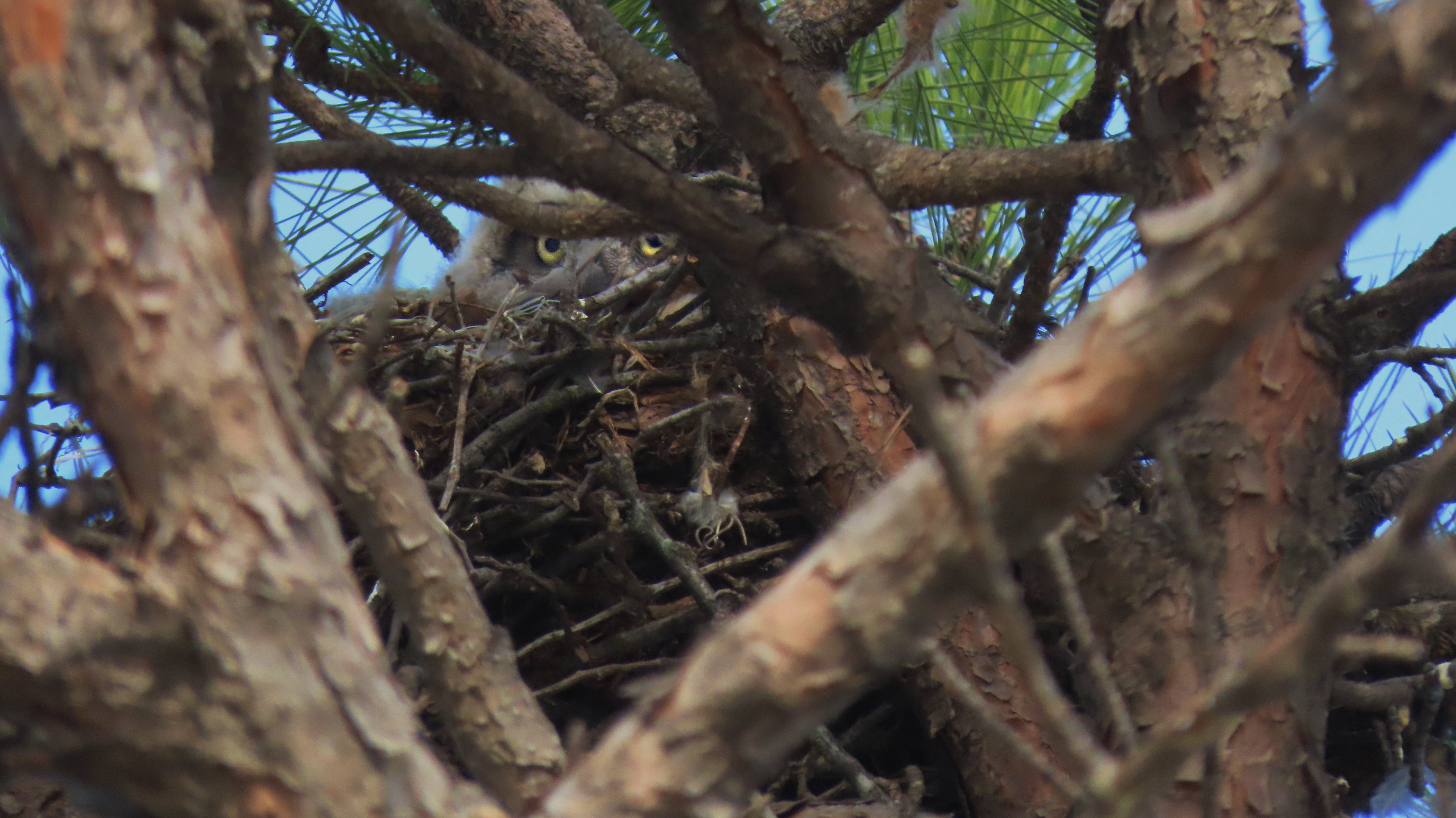
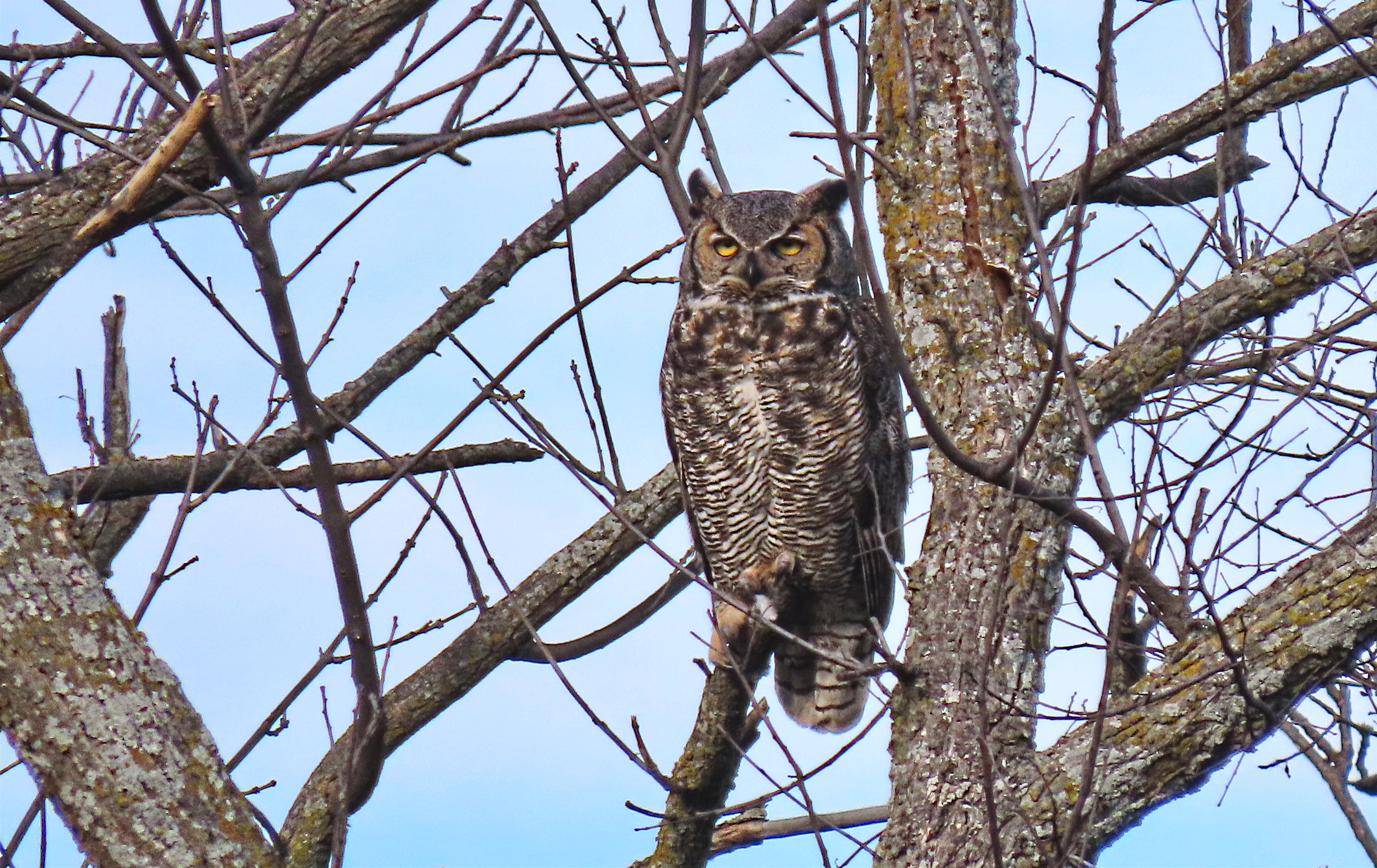
While we waited, we kept a close eye on the adult owl to ensure it didn’t try to defend its young against the climber.
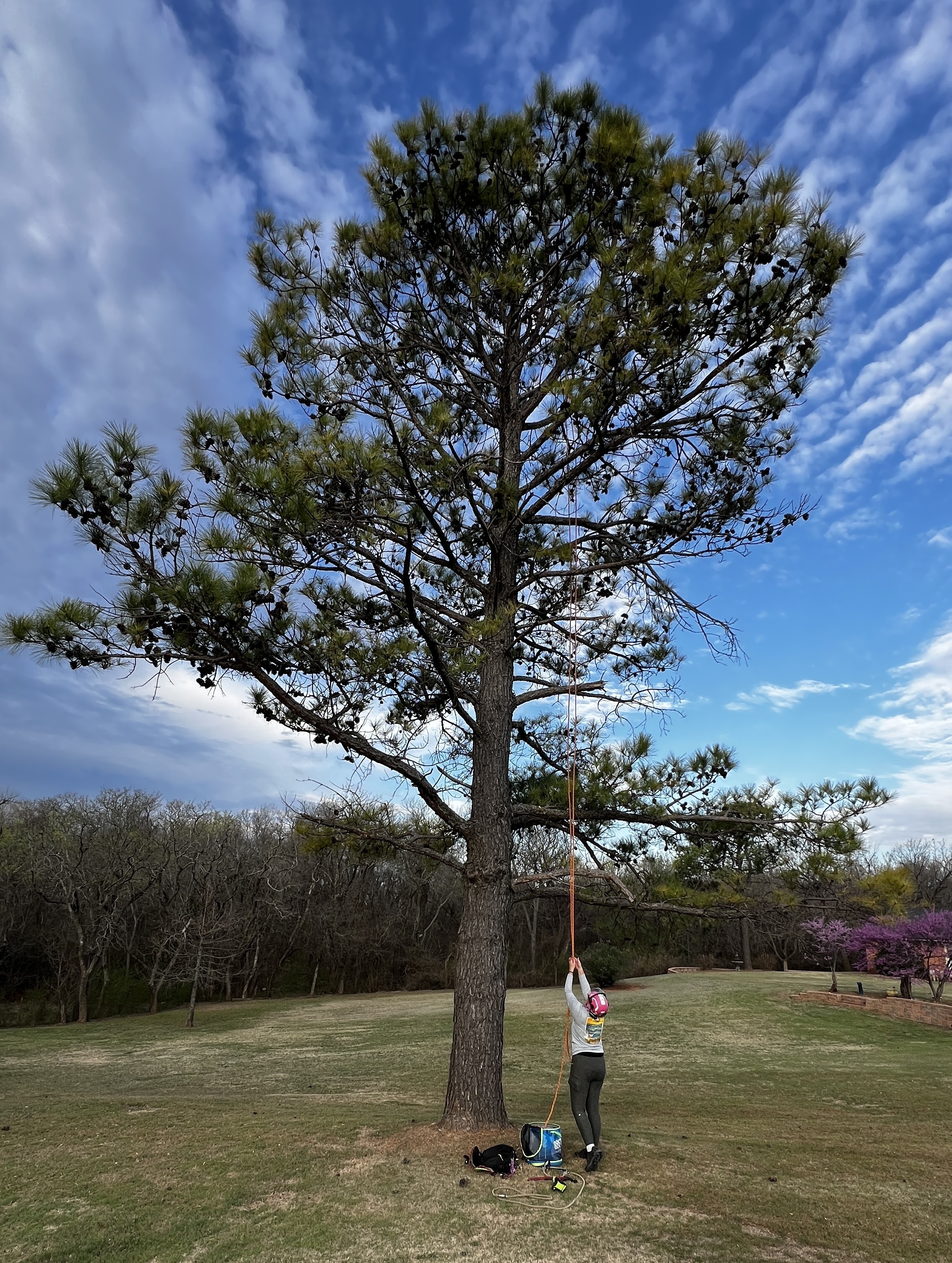
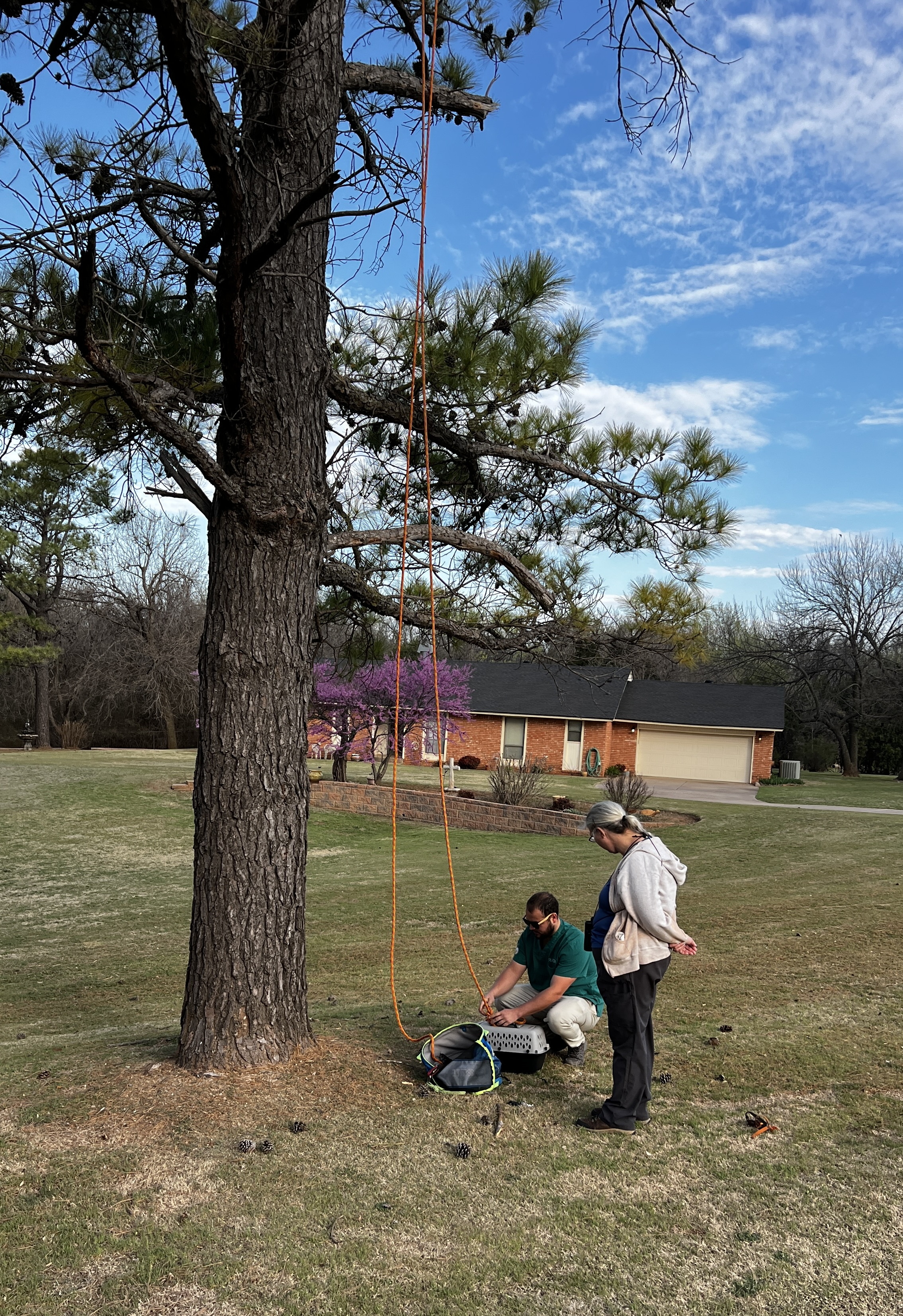
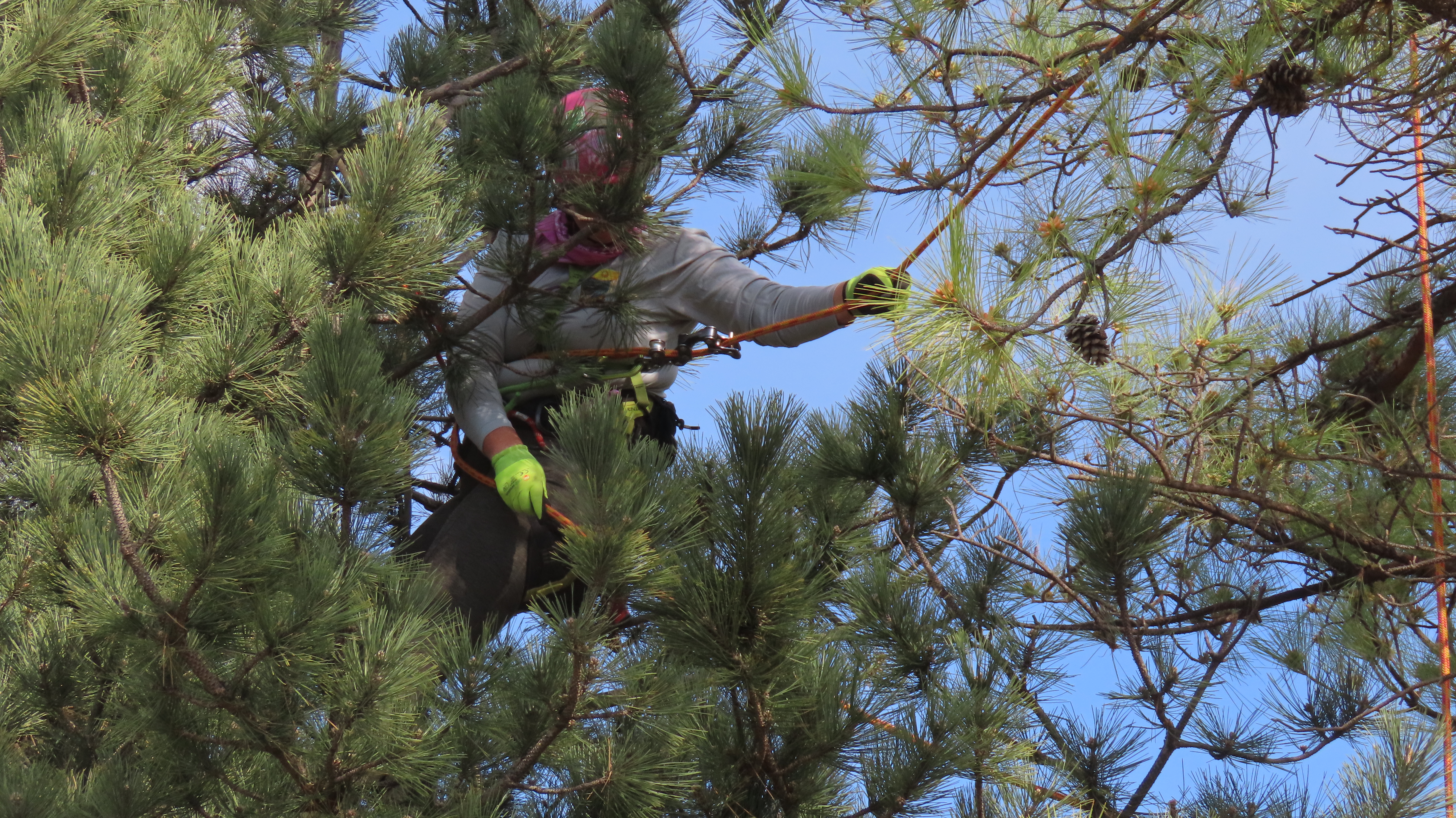
Barbara Fuson, a professional arborist with Lumberjane Tree Services, volunteered her time to climb the tree and return the owlet. Despite the tree’s impressive height, she made the climb look effortless.
Just as we were preparing to send the carrier up, a noisy mob of crows discovered the parent owl. Soon, a red-shouldered hawk joined in, creating a chaotic and deafening scene. Even a barred owl in the distance started calling!
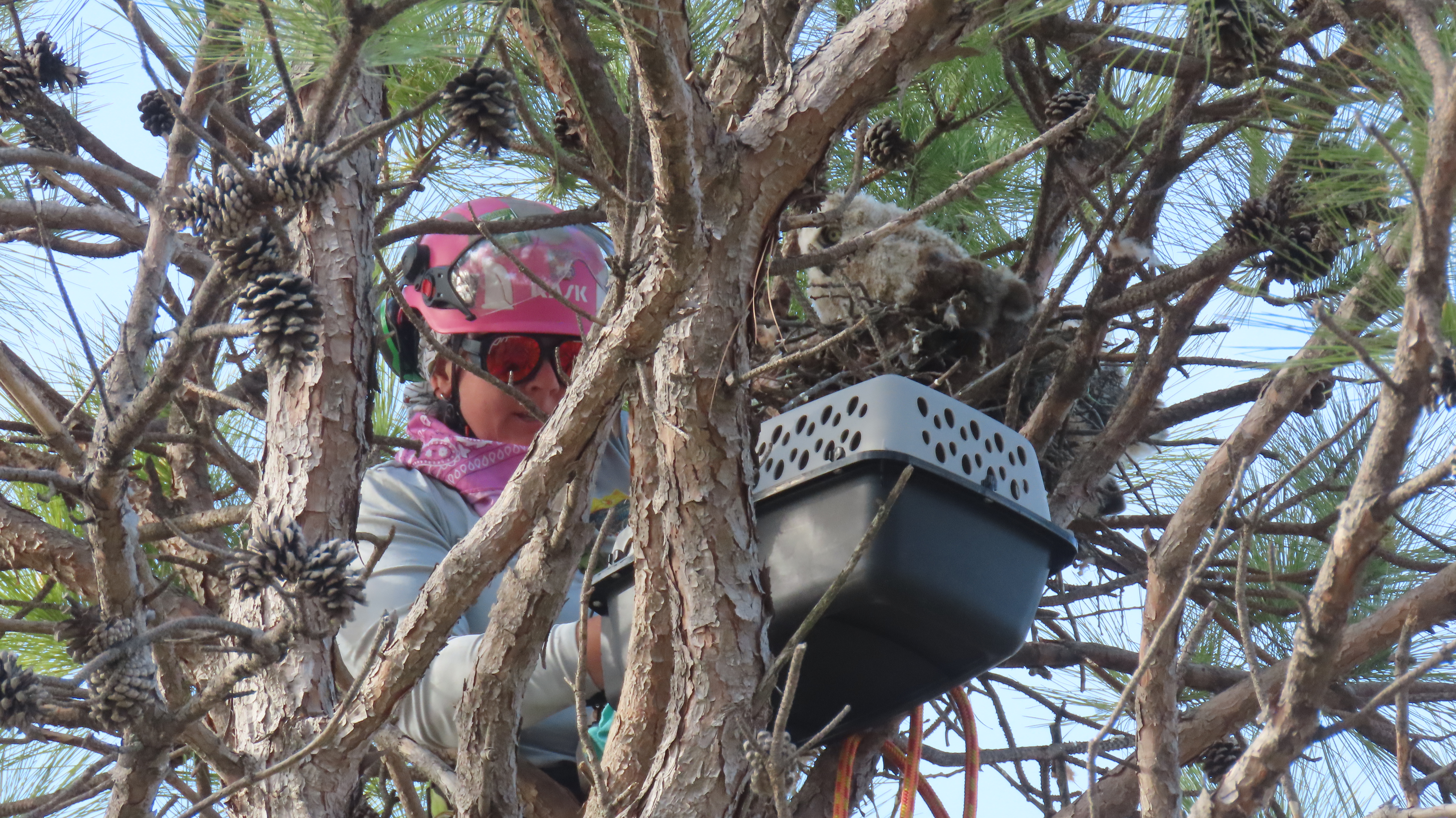
Once the owlet was back in the nest, Barbara was down from the tree and the owners agreed to watch for the parents to return, it was time for the next.
The second renesting
This owlet was a bit older, having been in veterinary care for a bit longer than the first. A sibling and a parent were in the nest when we first arrived, although the parent flew to nearby trees once Barbara started setting up her ropes.
It didn’t take long at all for the crows to find it, and again a red-tailed hawk joined in the mobbing.
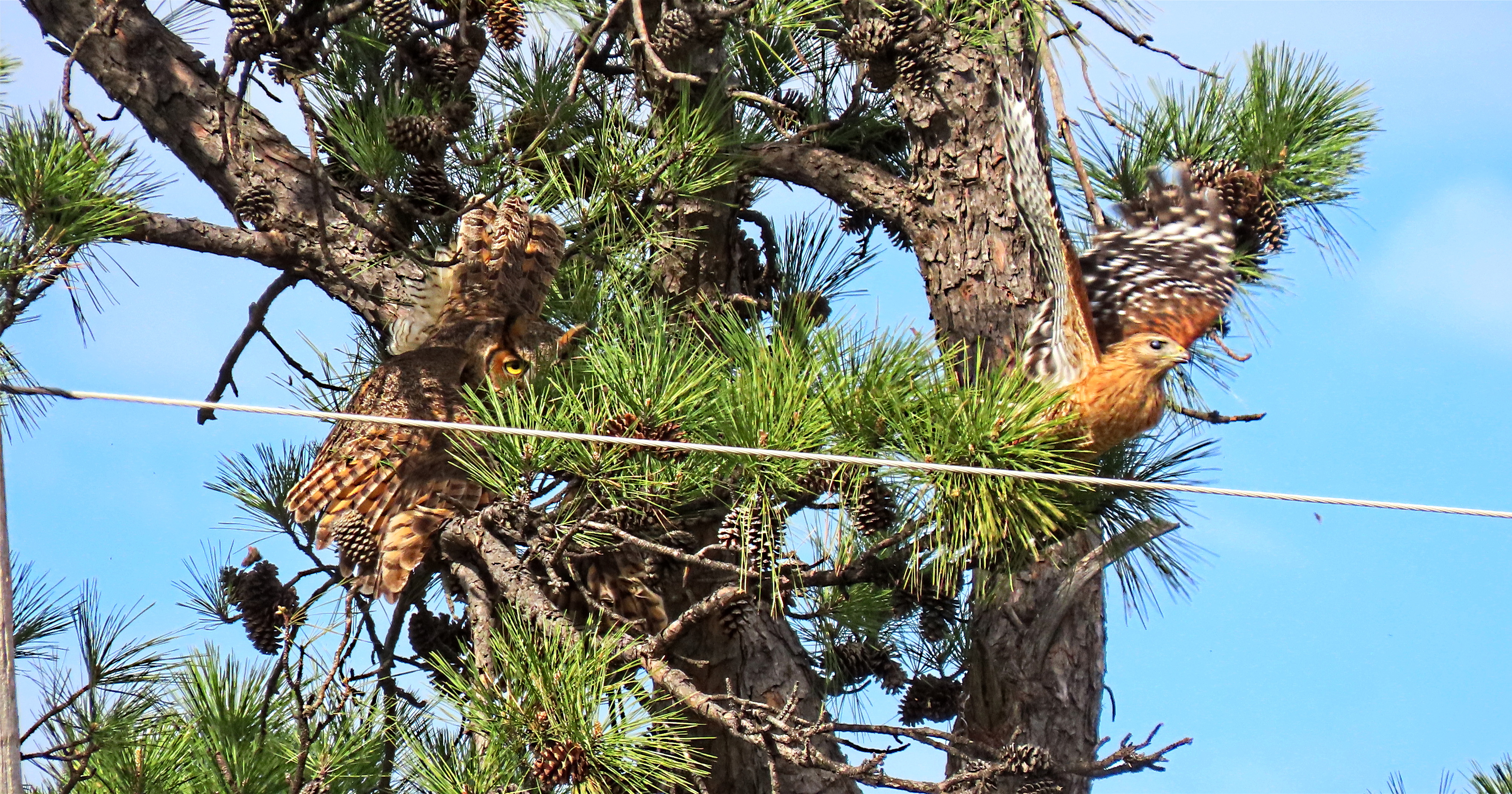
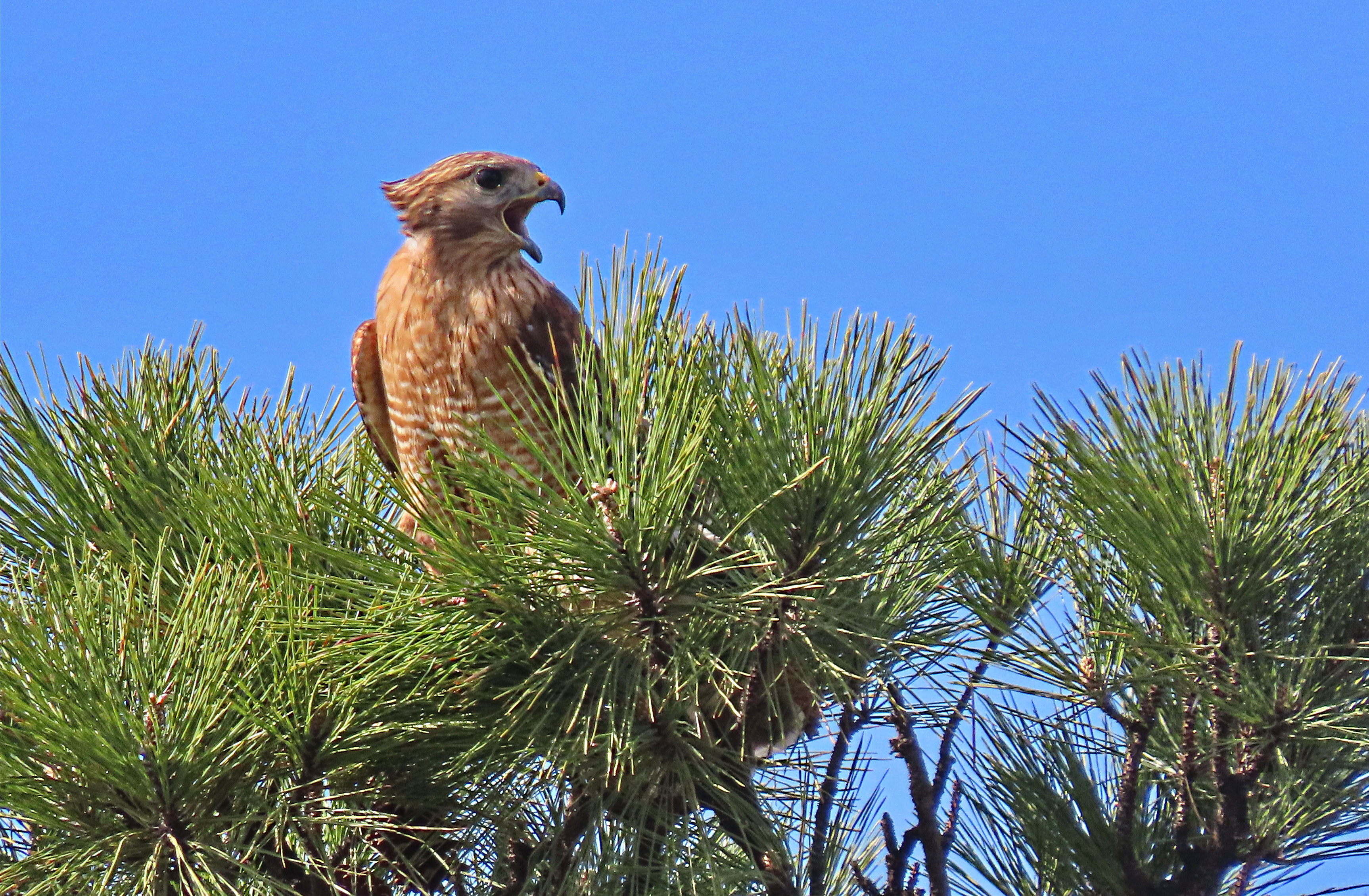
The parent managed to find a closer tree with more cover where it could watch.
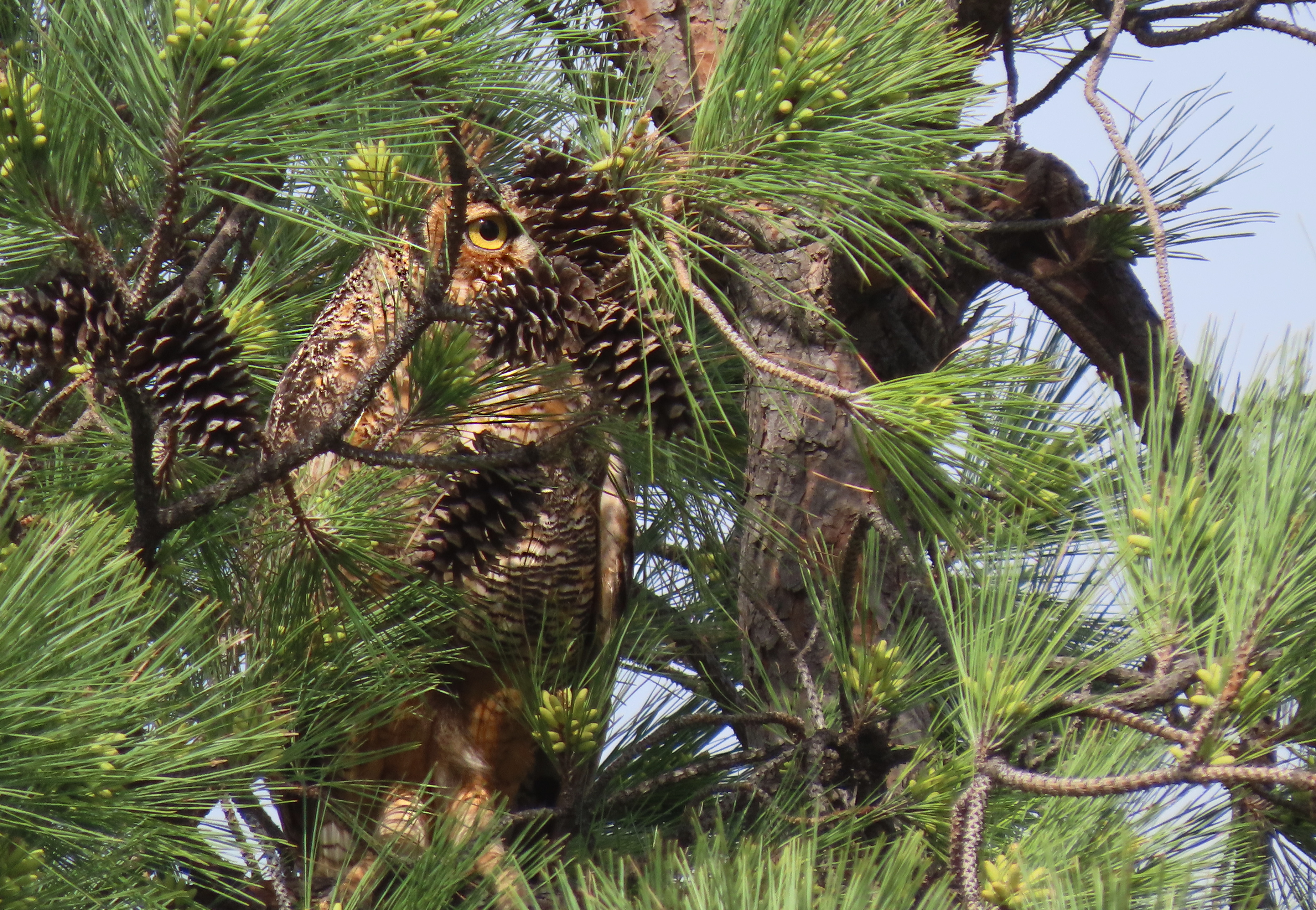
This tree wasn’t as sturdy as the first, so Barbara had to climb an adjacent tree and reach over to the nest. Once again, she made it look easy!
The best photo of the day came from Barbara herself, an owl selfie.
How you can help
WildCare Oklahoma receives no state or federal funding for wildlife rehabilitation—unlike in many other states. Their entire operating budget comes from donations.
Ways you can support WildCare:
- Shop at their gift store
- Make a one-time or monthly donation
- Purchase supplies from their Amazon wish list
WildCare’s annual budget for direct program expenses is $338,000, covering essential costs like professional staff, nutrition for 240+ species, and medical care for 7,000+ patients each year. Despite this, administrative costs remain low at just 4.3%, and Executive Director Rondi Large works on a completely voluntary basis.
A day to remember
Watching these young owls return to their nests was an incredible experience—a reminder of the power of teamwork and the dedication of those who care for our wild neighbors. Every rescue, every climb, and every chirp from the back seat made it clear how vital organizations like WildCare are.
If you ever have the chance to support or volunteer for a wildlife rescue, we highly recommend it. You never know—you might just find yourself in the middle of an owl selfie moment too!
A Final Note
If you enjoy these posts and usually see them through Facebook, consider subscribing! I don’t spam, sell your data, run ads, or charge you to read. We started this blog because people wanted to follow our journey, but Facebook’s algorithm doesn’t always show our updates. By subscribing, you’ll get an email each time I post—so you never miss an update.


 Ranch Naturalists
Leave a reply to Amy Wing Cancel reply