The first signs of Spring
Julie and I were out foraging for wild garlic when we saw our first wildflower of the season.
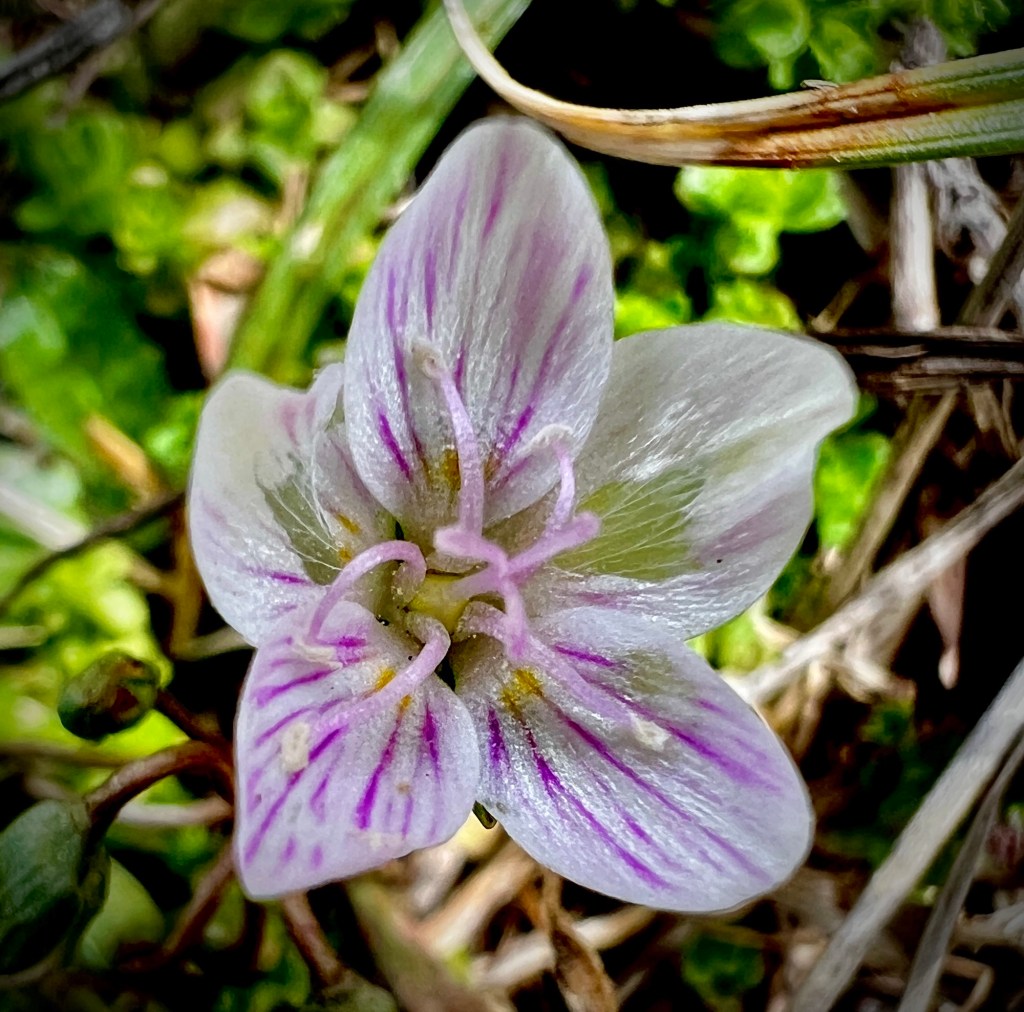
This is the Virginia Spring Beauty, one of the earliest blooming wildflowers, and Oklahoma is on the western edge of its native range. This is a tiny flower (about the size of a dime), and we only saw a few in the area. In my research, I’ve read that later in the spring they will become more numerous and form large, spectacular drifts across the landscape. We’re going to keep an eye on this area.
Of course, Julie’s first reaction: Can I eat it?
This low-growing plant has tiny underground tubers that can be prepared and eaten just like potatoes. Spring beauty is also known as the “fairy spud.” The tubers are found about two to three inches under the soil and measure from a half inch to two inches in diameter, and have a sweet, chestnut-like flavor. This was a popular food source for Native Americans and early colonists. The Iroquois would also give a cold infusion or decoction of the powdered roots to children suffering from convulsions, and believed eating the raw roots permanently prevented conception.
Euell Gibbons, the famed health food advocate (remember Grape-Nuts?), warned in 1970 about overharvesting, emphasizing the importance of preserving the plant’s beauty.
“The tubers are good food for the body, but after a long winter, the pale-rose flowers in early spring are food for the soul.”
— Euell Gibbons
These days, wild collection of spring beauty and other native plants is controversial, due to issues of sustainability. (In at least one state—Massachusetts—spring beauty is now listed as endangered). It also takes a lot of tubers to feed one person. In any case, it’s not necessary to harvest native edibles when they can be grown in the garden.
We plan to transplant some once they get more abundant, and maybe we can grow enough to try them next year.
The New Wood Wagon
Julie and I have been taking the Kandi out collecting wood for her Hügelkultur (I’ll explain that below), and we found we needed a bit more space for logs. So we bought this:
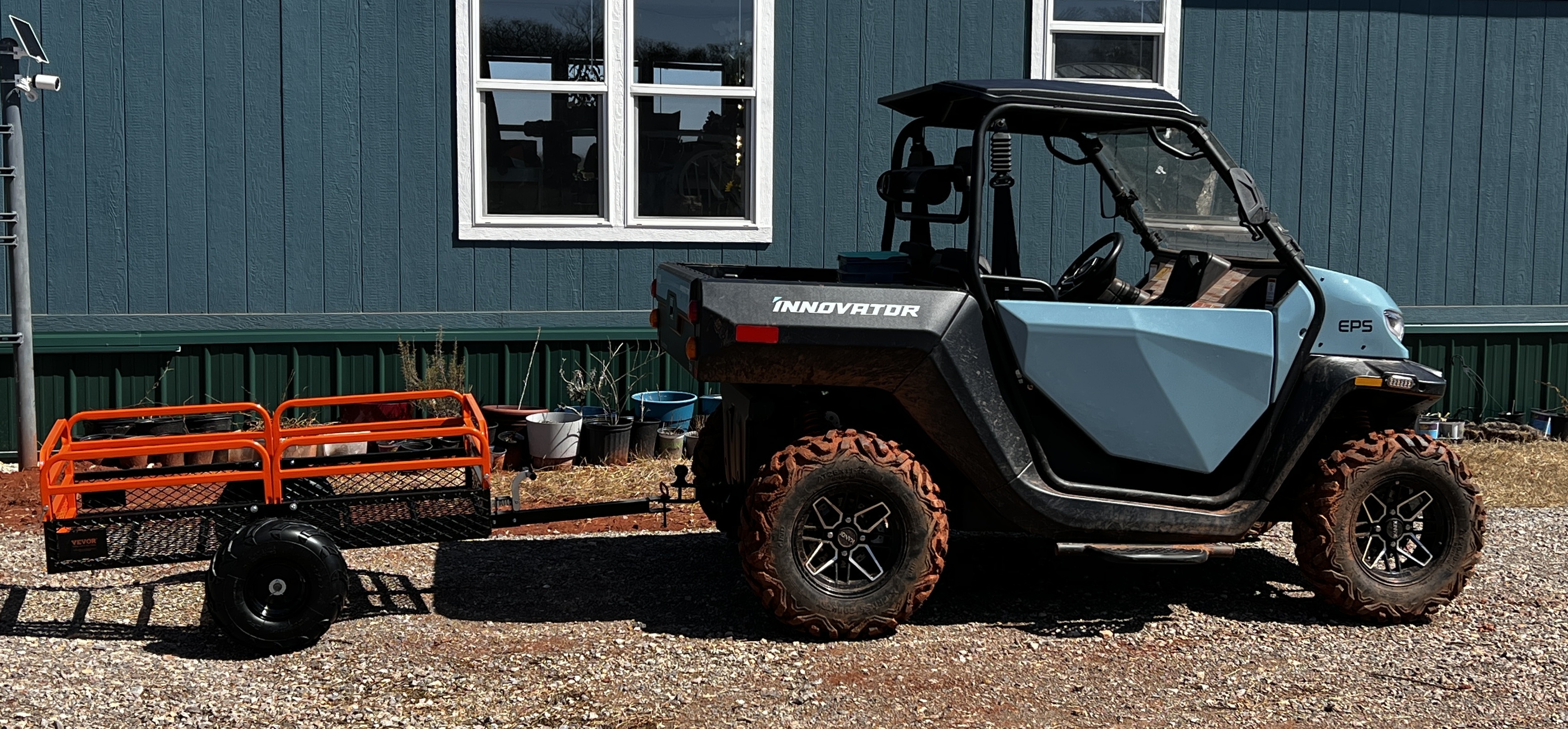
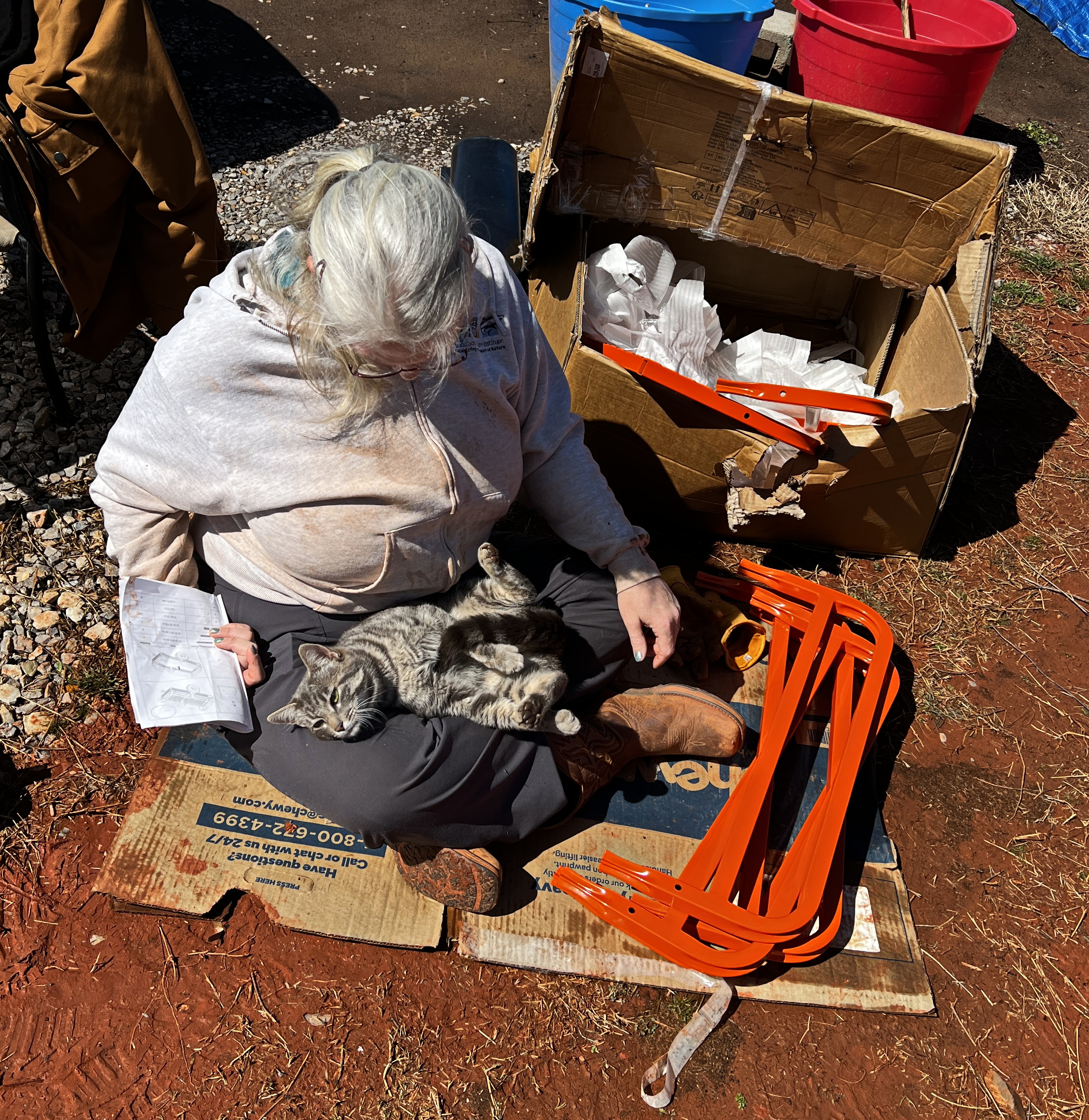
It’s not huge, but it was inexpensive and will hold plenty of logs and branches. It was fun putting it together with our feline supervision.
Hügelkultur
Hügelkultur is a method of gardening that has been used for centuries in Eastern Europe and Germany, often as part of a broader permaculture system.
Hügelkultur is a centuries-old, traditional way of building a garden bed from rotten logs and plant debris. These mound shapes are created by marking out an area for a raised bed, clearing the land, and then heaping up woody material (that’s ideally already partially rotted) topped with compost and soil.
Julie is experimenting with several different versions of plant beds using this method, so we’re gathering fallen limbs and rotting wood from all over the ranch. She’s been wanting to try this for years, but in Louisiana, it would have just been a termite farm.
There are many different ways to create a hügelkultur bed, but one way to explain is this:
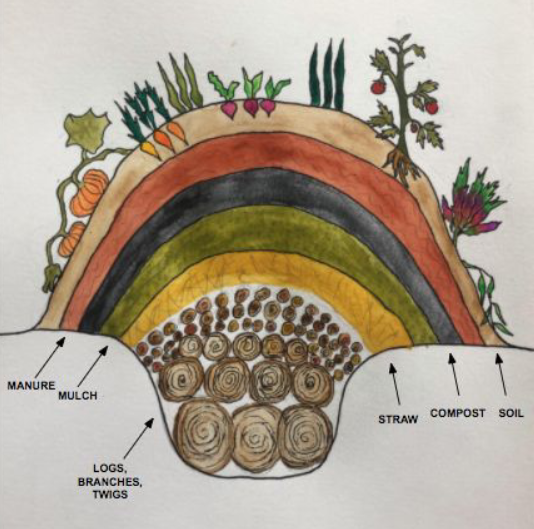
The benefits to using this method of gardening include:
- Little-to-no watering: After watering the first year, it may not be necessary to water as frequently because the logs at the base of the bed will act as a sponge, soaking up excess moisture, and storing it for the crops to use.
- Nutrient supply: The gradual decomposition of wood, along with other materials that make up the bed, will provide long-term nutrients for the plants. The nutrients produced from a hügelkultur bed can sustain a garden with rich soil for up to 20 years — no need to till or supply additional fertilizers.
- Extended growing season: A hügelkultur bed essentially acts as a compost bin: Just as compost heats up as it decomposes, so does the garden. This allows crops to start earlier in the spring and grow longer into the fall.
- Maximizes garden space: The dome-shape of the hügelkultur bed increases the surface area of your garden space. More food in a smaller space.
I’m looking forward to seeing how this works.
Wildcare Oklahoma and Raptor Renesting
We spent a few hours the other day attending training at Wildcare Oklahoma to become part of the raptor renesting team.
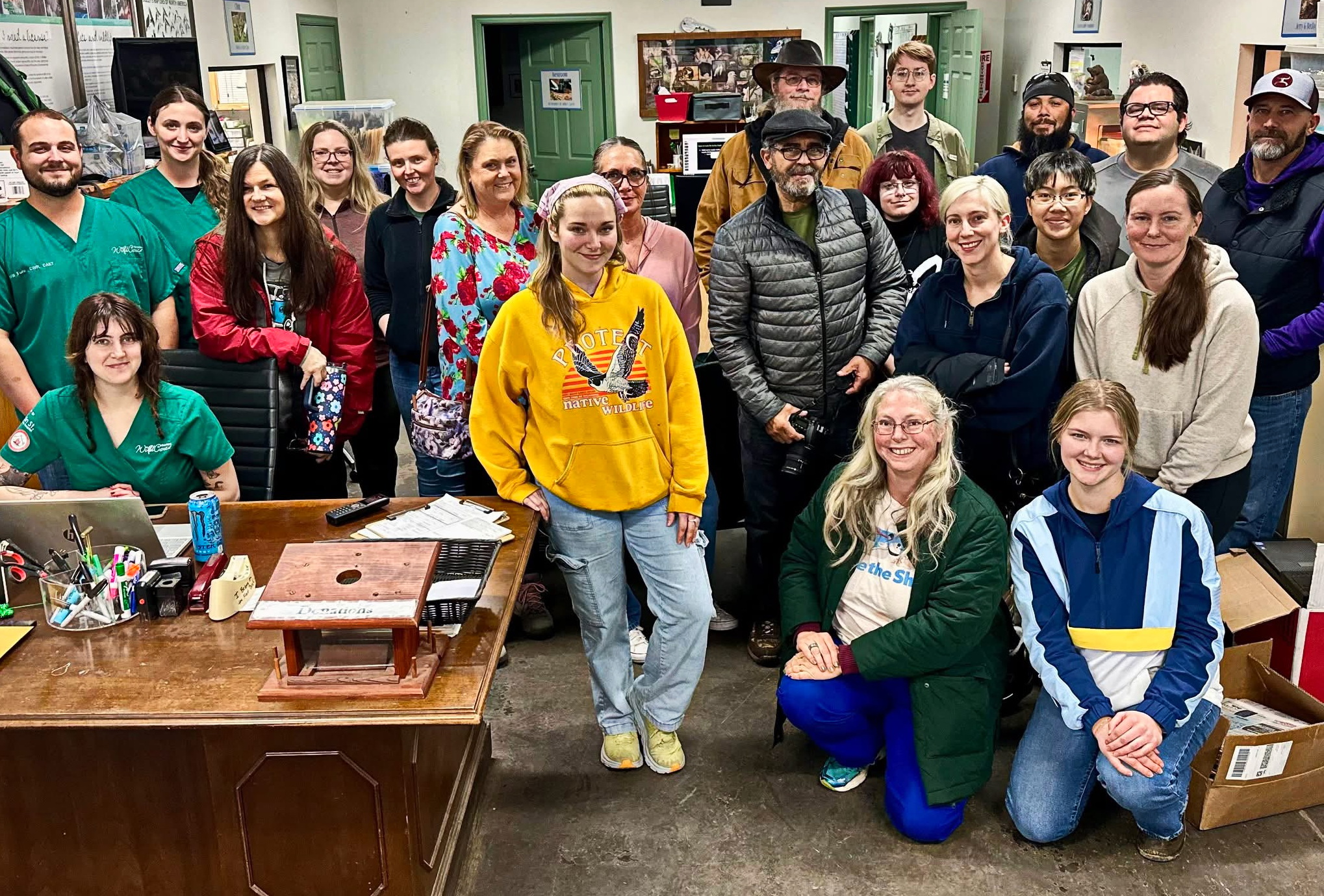
WildCare is a non-profit organization dedicated to wildlife rehabilitation throughout the state of Oklahoma, admitting over 7,500 patients representing over 240 different species annually.
What we will be working with specifically (at least for starters) is the efforts to return an injured raptor (such as an owl, eagle, falcon, kite, or hawk) to its original or replacement nest where it can be raised by its parents in their natural environment.
Our job will be one or more of these:
- Transporter—Transporter volunteers are the first responders. They collect the baby raptors that have fallen from their nests and drive them to Wildcare for health checks and medical care before renesting them.
- Scouter—These volunteers investigate the nesting area to help locate the parents, siblings, and exact nest location. They take photos and look for clues to ensure that the parents are still in the area—this is essential for renesting.
- Watcher—Watcher volunteers provide Wildcare with updates on the nest before and after reuniting them. They ensure the renesting was successful and that mom and dad have resumed the care of their baby.
- Climber—People with experience climbing trees or with equipment often renest dozens of raptors each year. On occasion the nests can be so hard to reach, so sometimes cherry pickers or boom lifts are used.
- Spotter—Safety is the job for spotters! These volunteers assist climbers with keeping an eye on raptor parents or helping secure equipment from the ground.
I suspect I am too old and clumsy for the climber role, but Wildcare often uses tree professionals and utility companies for assistance. Otherwise, this seems like a perfect opportunity for us.
A Final Note
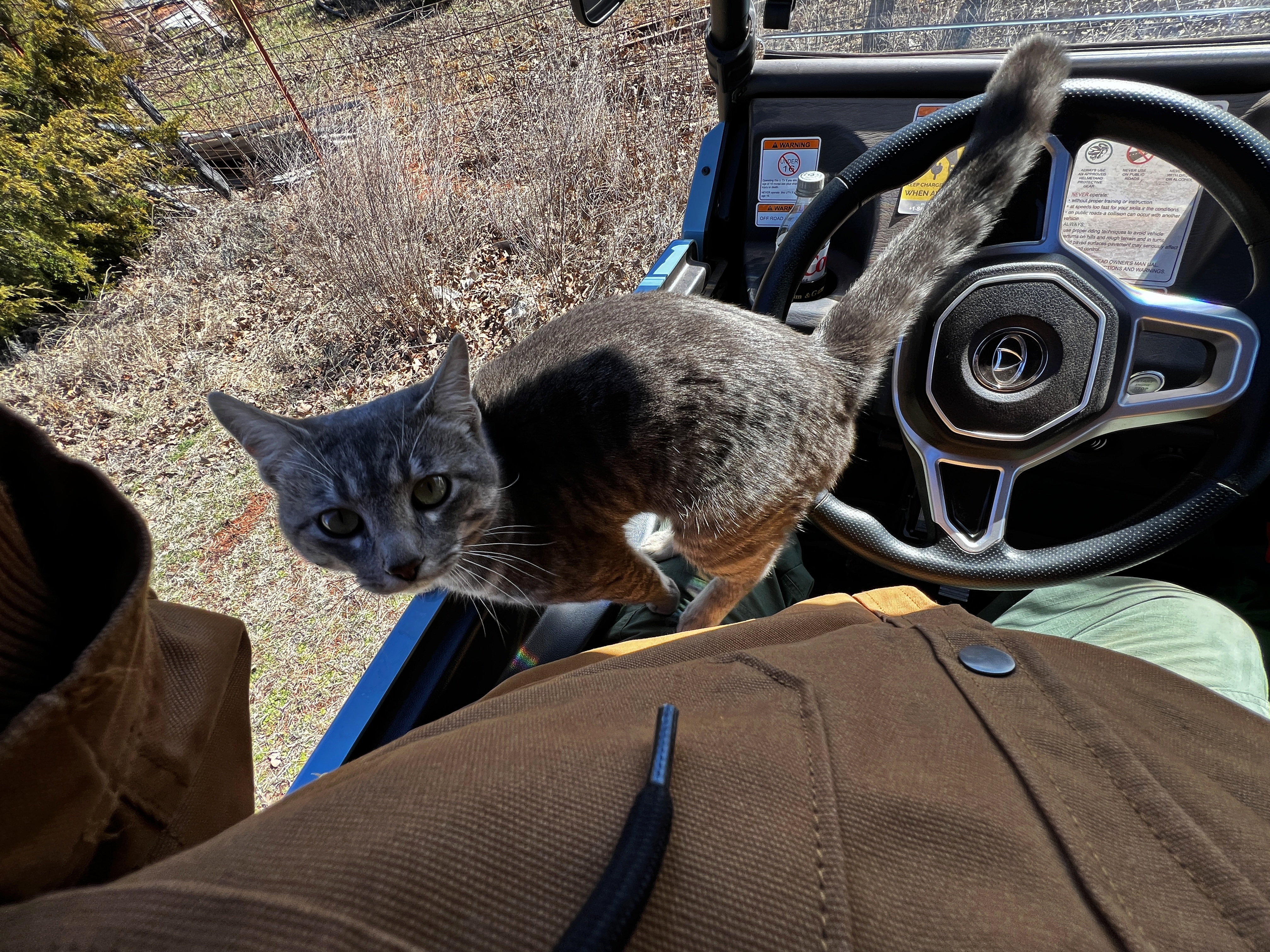
I’ll close with another photo of the as-yet unnamed feline supervisor, here trying to get driving lessons in the Kandi.
Love following our journey? If you usually catch our posts on Facebook, consider subscribing! Facebook’s algorithm doesn’t always show updates, but by subscribing, you’ll get an email whenever we post—so you never miss an adventure


 Ranch Naturalists
Leave a comment