Birding with the Orleans Audubon Society
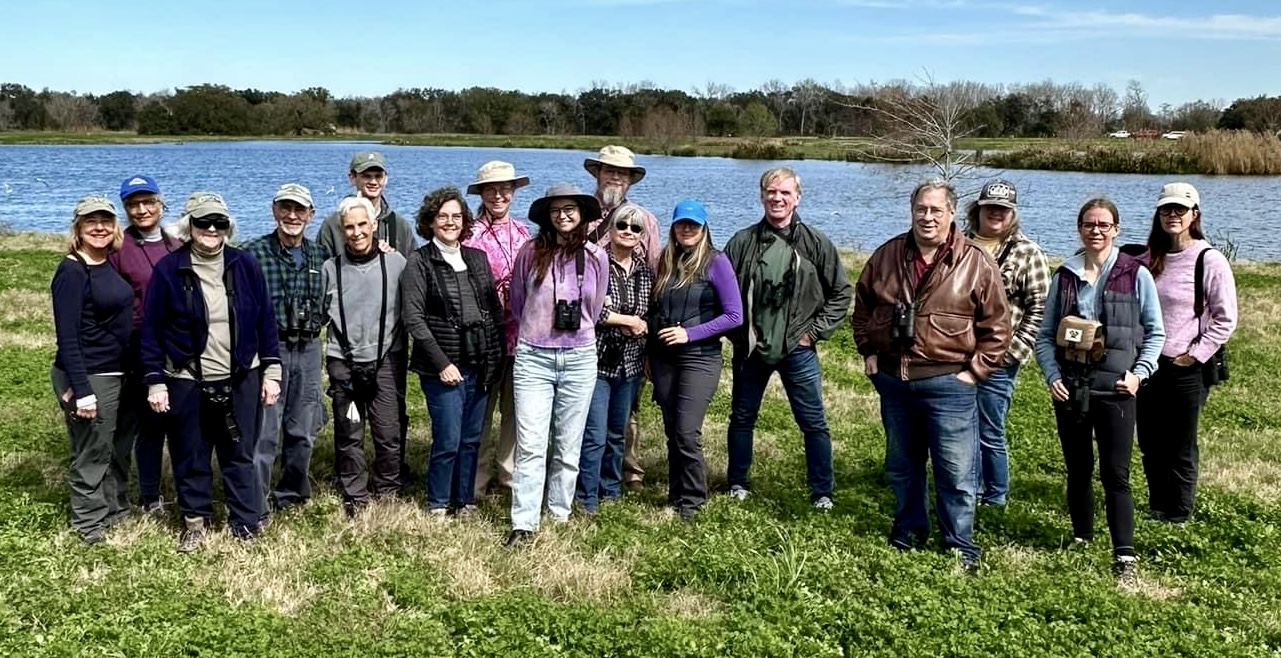
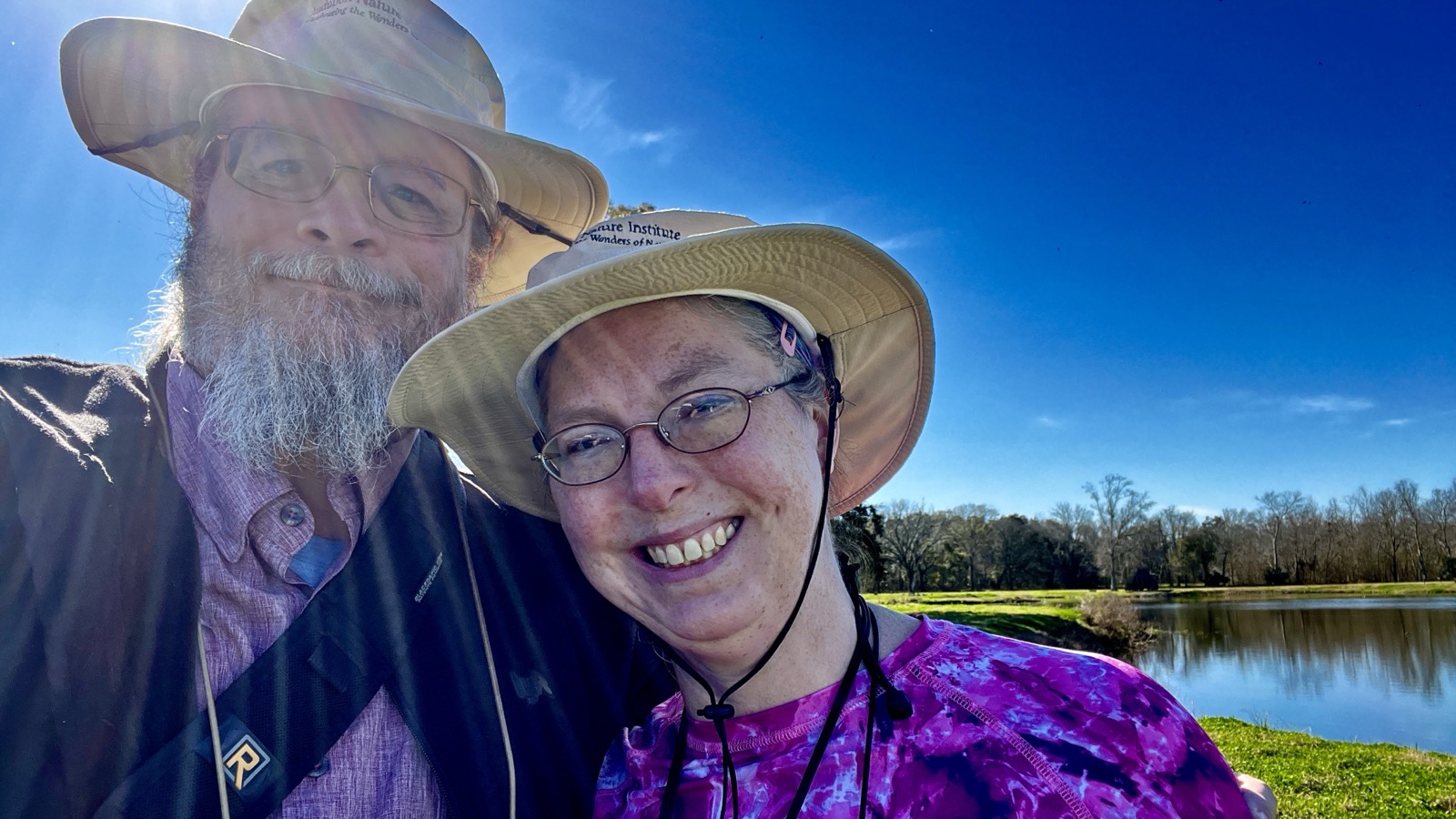
Yesterday, Julie and I joined the Orleans Audubon Society for a birding trip to Paloma Lake in Braithwaite, LA. The owners are considering billing themselves as a local birding location and reached out to the OAS to invite us for a trip. The entire lake and grounds are private unless you’ve booked an event or a stay at the campgrounds.
From their website:
“Paloma Lake, previously known as Stella Plantation is a working plantation situated at the lowermost part of the Mississippi River as it nears the end of its journey through the heart of the country. Today Paloma’s fields are used to grow satsuma and navel oranges, kumquats, lemons, grapefruit and pecans. The diverse 1500 acres that make up the plantation feature lush marshes, cypress trees, crawfish ponds and forests home to diverse wildlife.”
We had a group of about 25, which is a little large for a birding group, but manageable. The hardest part was that we had to drive from spot to spot, and if the lead car saw something and stopped, the rest of us had to wait patiently with no idea of what they were looking at. Dr. Peter Yaukey, the group leader, is very good at explaining things in person, so the education continued whenever we stopped and got out of the cars.
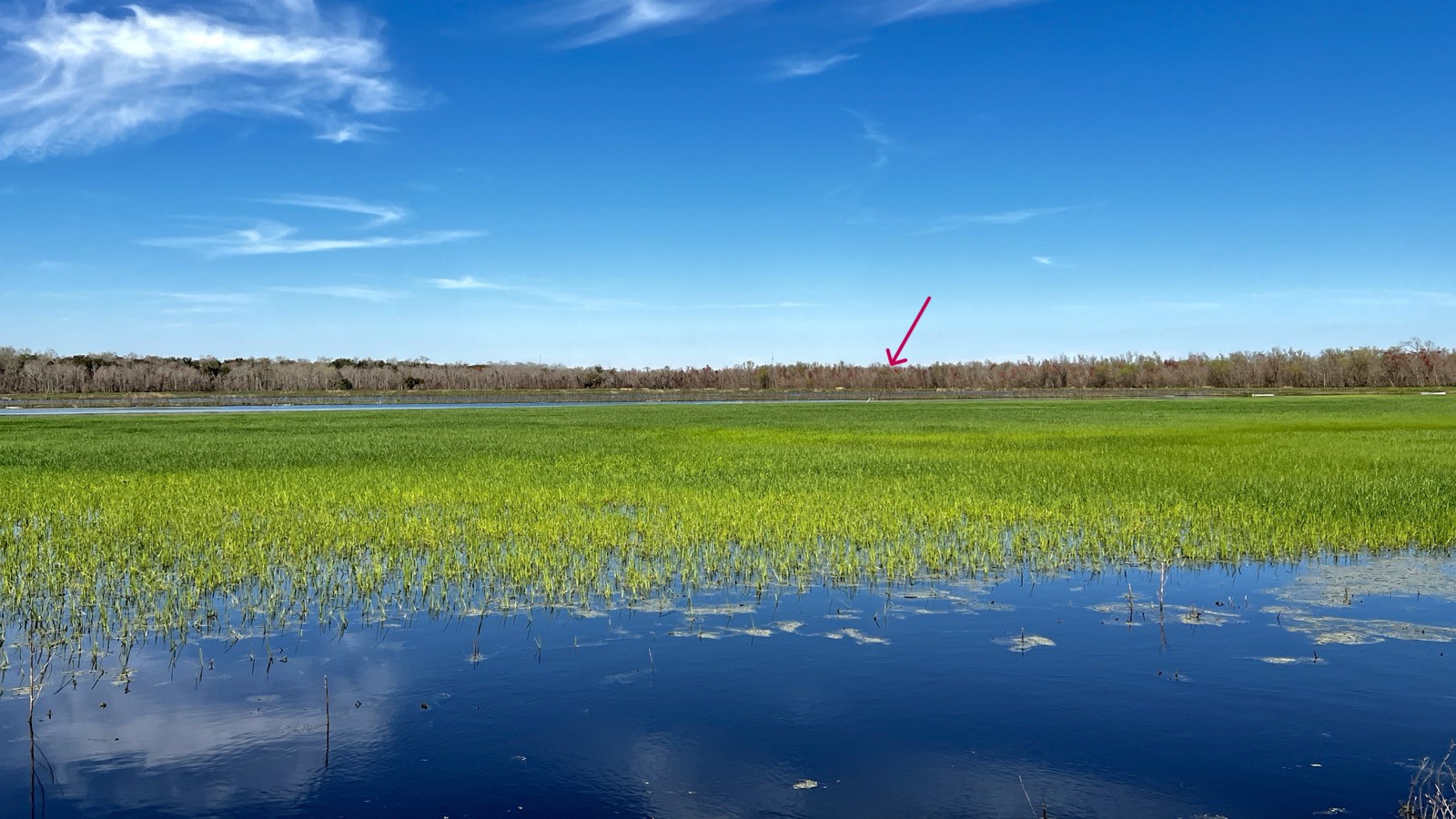
The lake itself is 53 acres and the crawfish ponds are very large, so most of the day’s birding was done at a distance. About a third of the people had scopes, and they were very good at sharing. Most of the photos I took were at the extreme long end of my zoom range, so the quality was not optimal. For example, here’s an image of one of the crawfish ponds (that’s rice growing to feed the crawfish).
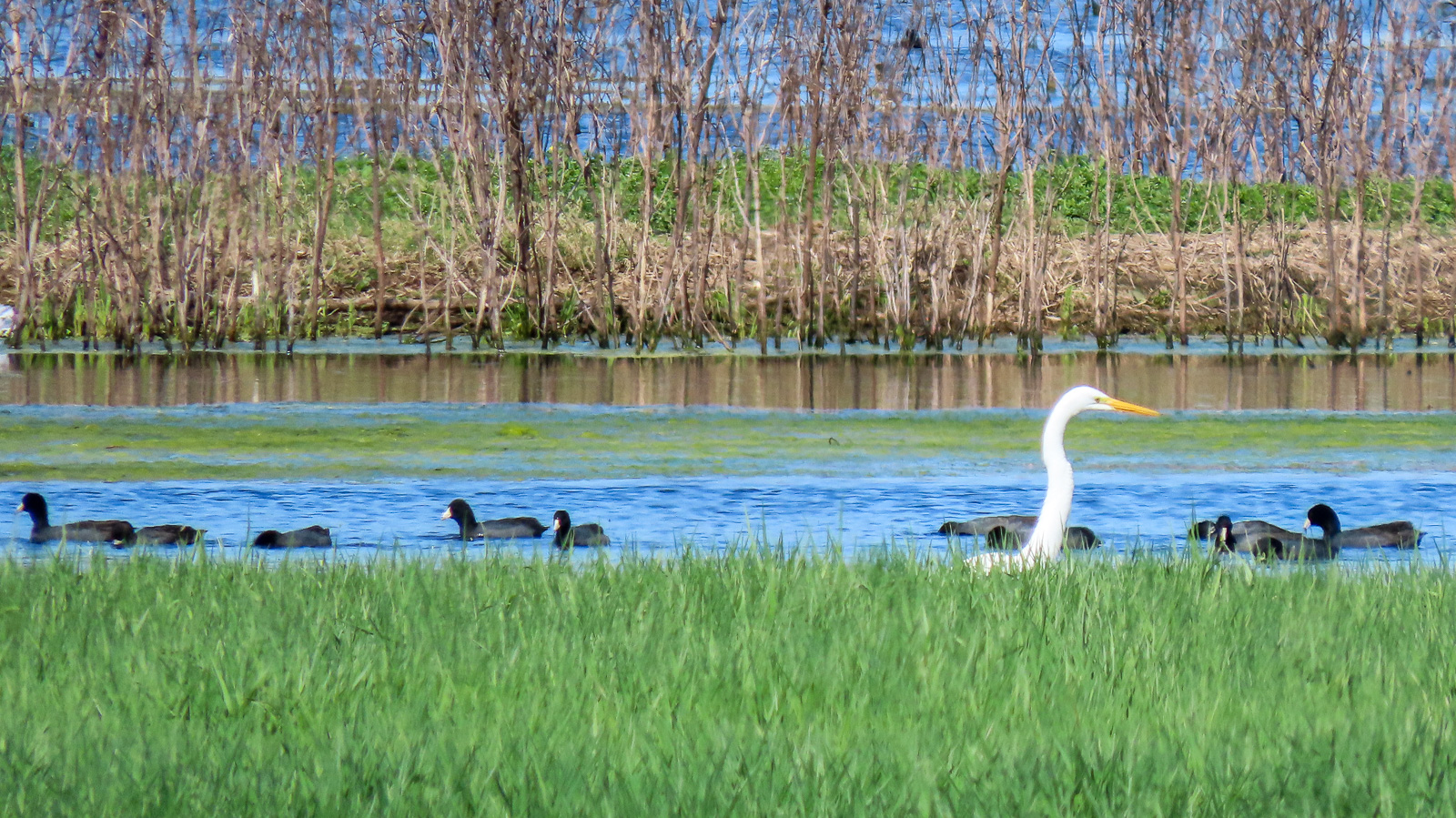
See that white dot by the arrow? Here’s an example of what it might look like a little closer.
We did manage to see some of the birds a little closer, the highlight being this bald eagle in the middle of the woods. I’ve never seen one that wasn’t in an open area.
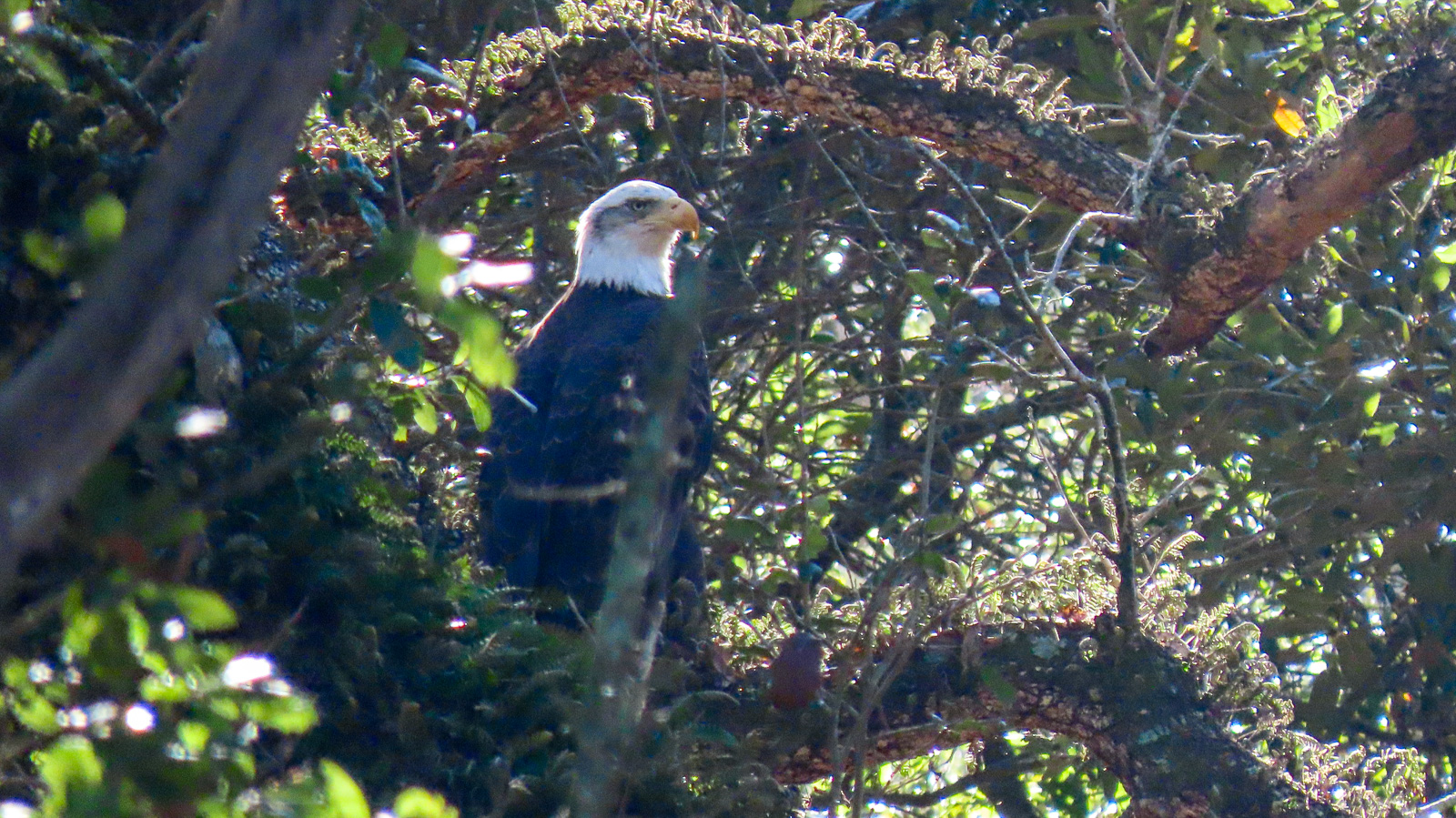
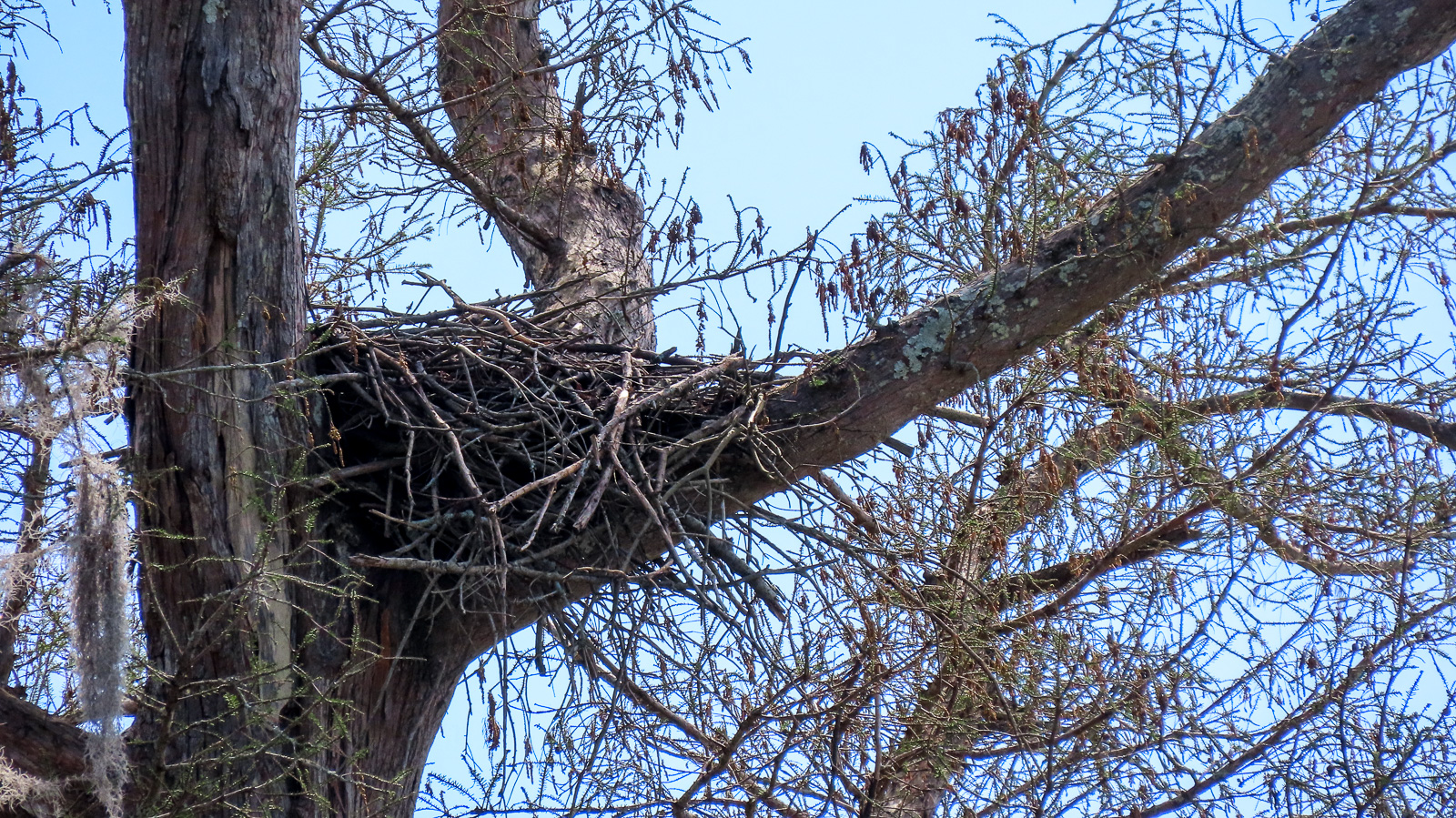
Later on, we found an eagle nest that might have belonged to this bird.
Anywhere you have water in south Louisiana, you’ll have alligators, and there was no shortage of those. Including one wearing a toupee looking very dapper and smug.
I was surprised by the Bonaparte’s Gulls, as I had only ever seen them on the beaches of Mississippi, but we counted at least 25 feeding in the lake. I’ve since learned that the Bonaparte’s Gull is the only gull known to regularly nest in trees.
The common name of the Bonaparte’s Gull honors Charles Lucien Bonaparte, a cousin of Napoleon Bonaparte who made important contributions to American ornithology while an active member of the Academy of Natural Sciences of Philadelphia during the 1820s. This is interesting information, but it will soon be irrelevant, since the American Ornithological Society will be changing all of the common names of birds named after people within the next few years.
You may have to click on the image to see the entire photo (it’s an automatic crop).
Some other interesting birds:
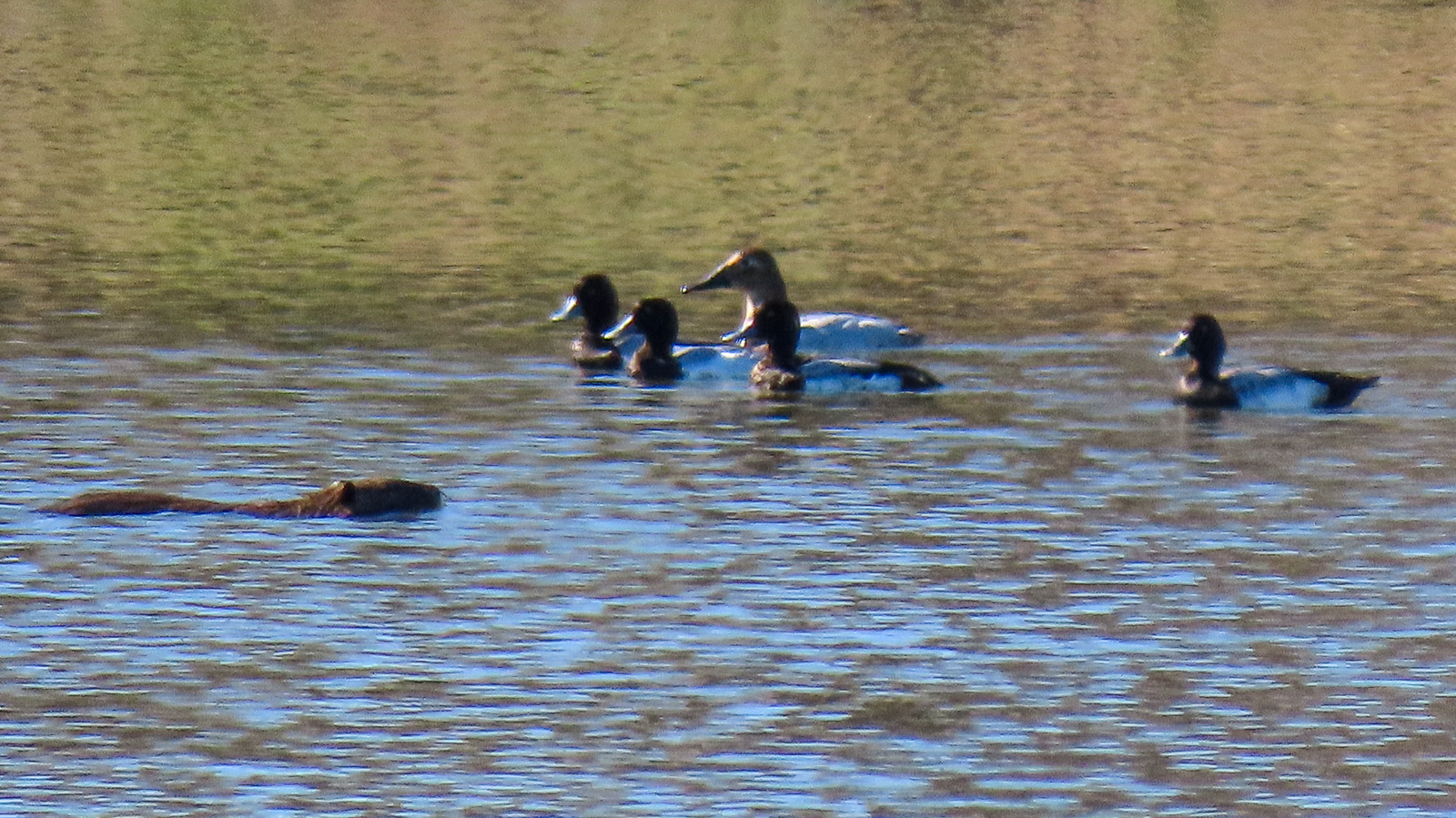
A canvasback with some coots and a nutria swimming by:
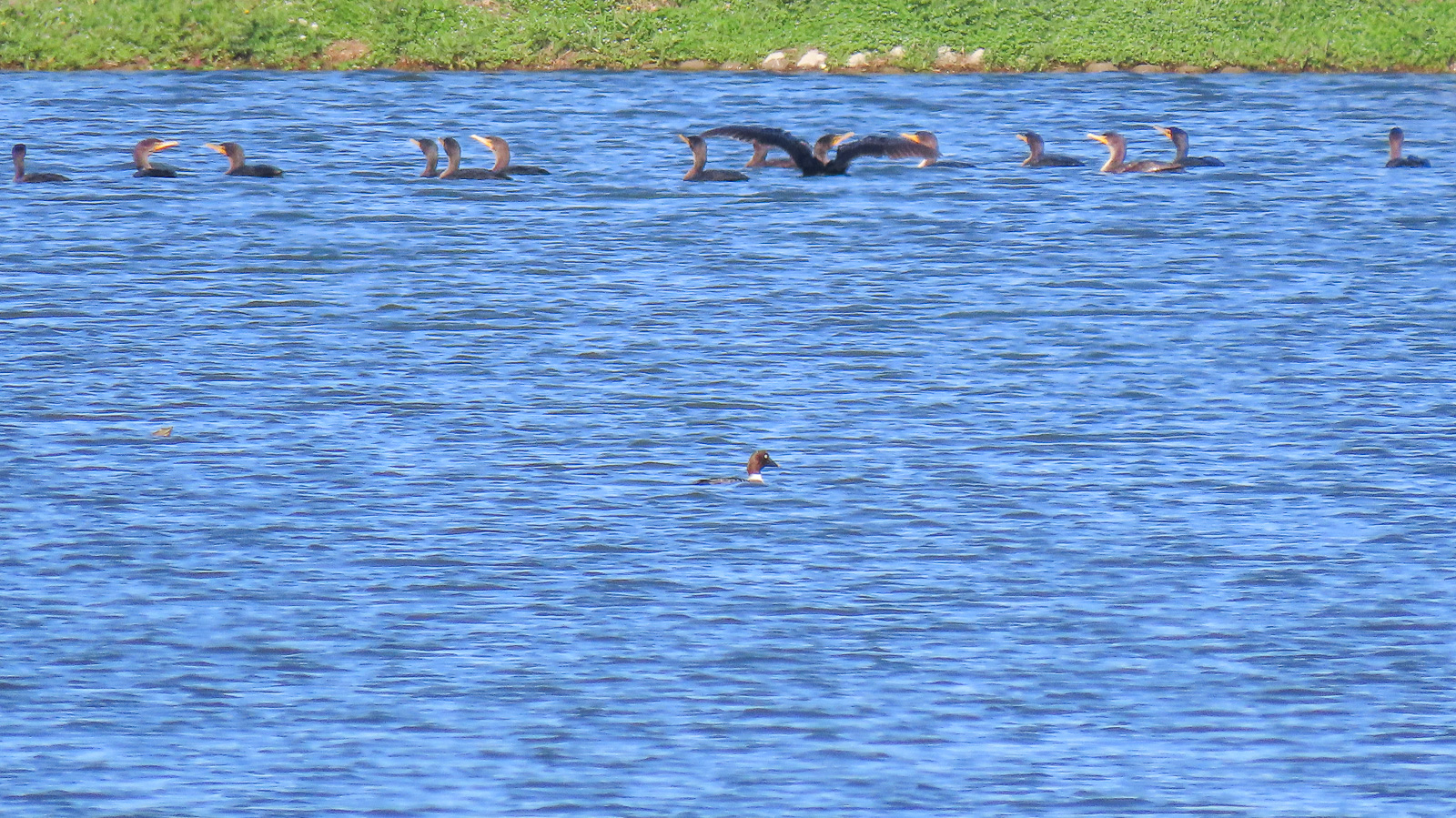
A common goldeneye (new life bird for us!), way far across the lake, with some cormorants in the background:
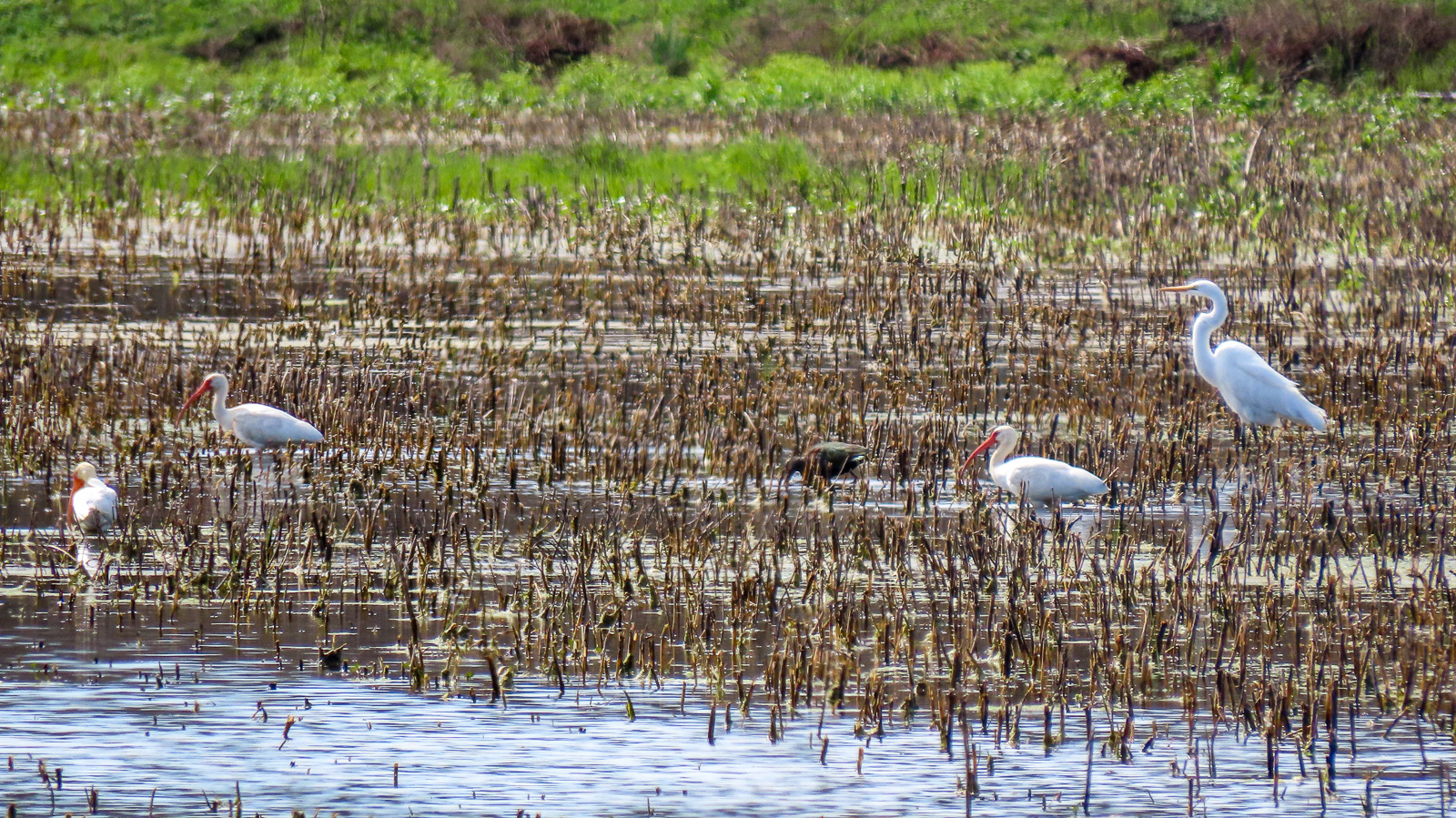
And a glossy ibis, accompanied by a great egret and some white ibis, identified by some people that have scopes and with better eyes and ID skills than I have. These were barely visible without binoculars or a zoom camera.
And, the gas birds. The fighter jets from the nearby air base were very loud, and whenever I see a coast guard helicopter I have to take a photo because they once rescued my father-in-law when he was lost at sea.
It was a nice day birding.
 Ranch Naturalists
Leave a comment